

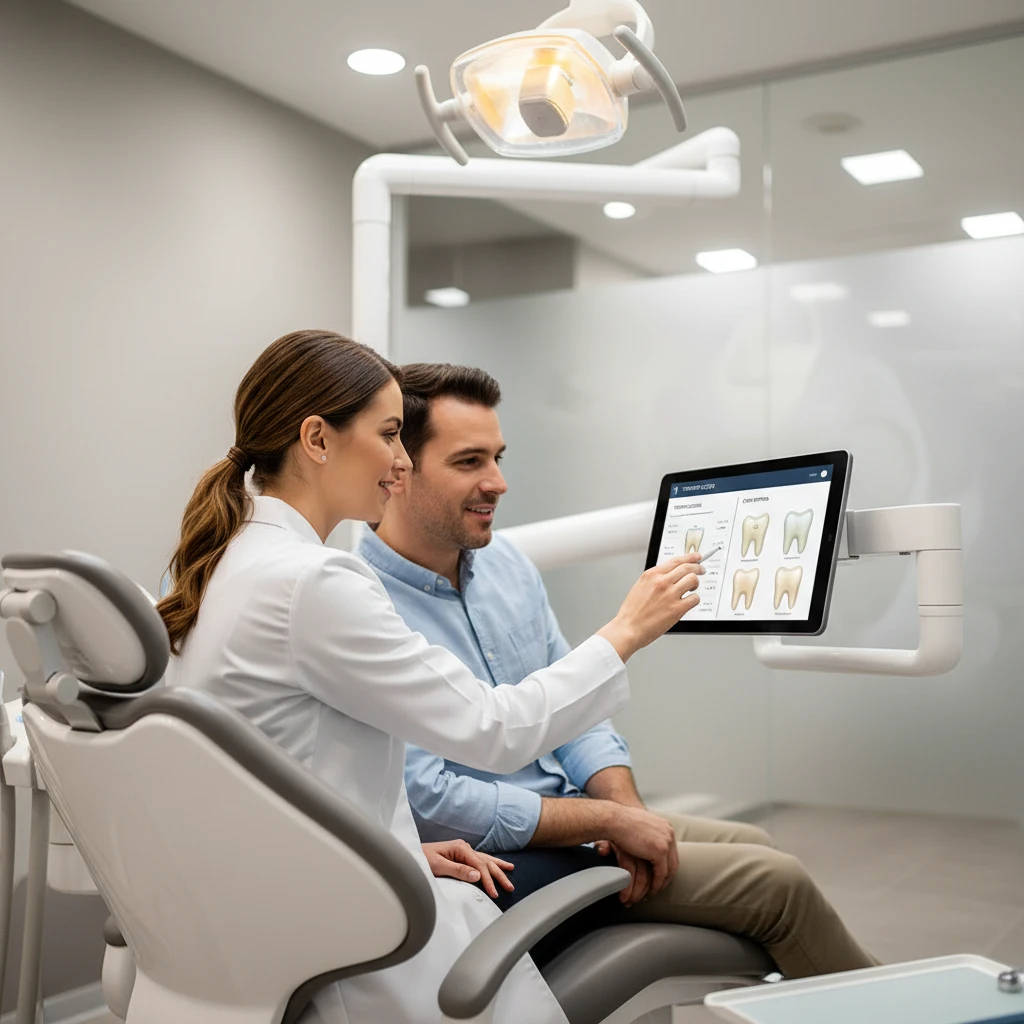
A clear discussion about dental crown costs starts with aligning clinical needs, lab inputs and patient expectations.
When patients in Sydney ask about dental crown cost, many dentists hesitate. You know your overheads and your lab, yet quotes can still swing hundreds of dollars between cases that look similar. At the same time, patients are quietly comparing prices on their phones.
This article is for dentists and other oral health clinicians in Sydney. It outlines a practical, clinically grounded way to reduce that variability: understand where lab costs come from, group restorations into predictable fee tiers, and align those tiers with a digital workflow that suits your practice.
TL;DR
- Crown fees vary in Sydney largely because lab inputs, materials, and workflows differ between cases and clinics.
- Recent ADA crown fee data, summarised for consumers in an independent Australian crown cost guide, suggests full crowns commonly fall around $1,250–$2,100 per tooth in Australia, with average fees in the mid-$1,700s; this is broad guidance only, not a quote for your clinic.
- A simple three-tier crown fee matrix (standard, advanced, complex) keeps chairside conversations predictable while still allowing for clinical nuance.
- Digital workflows help most when they reduce remakes, adjustments and communication friction with your lab, not just when scan times drop.
- Working with a lab that is transparent about materials, processes and regulatory obligations makes it far easier to hold your fee structure steady over time.
Dental crown cost in Sydney: a quick answer for patients
If you are a patient searching online, nationwide fee data suggests many Sydney clinics quote full crowns somewhere in the $1,250–$2,100 per-tooth range, with averages in the mid-$1,700s. This is an indicative range from fee surveys, not a personalised quote for your mouth.
- Typical fee range: Most full crowns in Sydney sit roughly between $1,250 and $2,100 per tooth; your dentist can confirm an exact fee only after examining the tooth.
- Tooth position and material: Front teeth and high-smile-line crowns, or those using premium layered ceramics, often cost more than monolithic crowns on lower-visibility molars.
- Case complexity: Deep margins, limited space, previous root canal treatment or implants can increase the fee.
- Lab and workflow: Using a local digital lab, expected turnaround times and remake rates all influence the final price.
Typical Sydney crown price bands
As a rough guide only, a single-tooth crown in Sydney often falls into one of these bands:
| Crown type (per tooth) | Typical Sydney fee band* |
|---|---|
| Back-tooth ceramic crown | About $1,250–$1,800 |
| Front-tooth / high-aesthetic crown | About $1,500–$2,100 |
| Implant-supported single crown | Often $2,000–$3,500+ (varies more) |
*Indicative only, based on ADA crown fee data and independent Australian crown cost guides. Your dentist will confirm your exact fee after a full examination and treatment plan.
Health funds, rebates and payment options
Crowns are usually classed as “major dental crown cost” for private health insurance. Rebates and gap fees vary widely between funds and levels of cover, so it helps to:
- Ask your dentist for item numbers so your fund can quote your likely rebate.
- Check annual limits for major dental crown cost and whether waiting periods apply.
- Ask the clinic about payment options, such as staged payments over visits or third-party payment plans, if you need them.
The rest of this guide is for dentists and oral health clinicians who want to make those crown fees predictable inside their own practices.
Why crown fees feel unpredictable in Sydney
Talk crown fees with colleagues across Sydney and you will hear very different numbers for what sounds like the same “full crown, item 615”. Some of that difference reflects demographics and rent; much of it comes from how each practice chooses materials and manages its lab relationships.
At the chair, this shows up as longer appointments than expected, harder fee conversations and a tendency to build bigger safety margins into every quote.
Once you break down the drivers of your lab bill and standardise them, crown-fee discussions become far more predictable.
What actually drives lab costs for crowns?
From a lab’s perspective, two crowns with the same item number can be very different jobs. A simple way to explain this to yourself (and, when needed, to patients) is to group the drivers into three buckets.
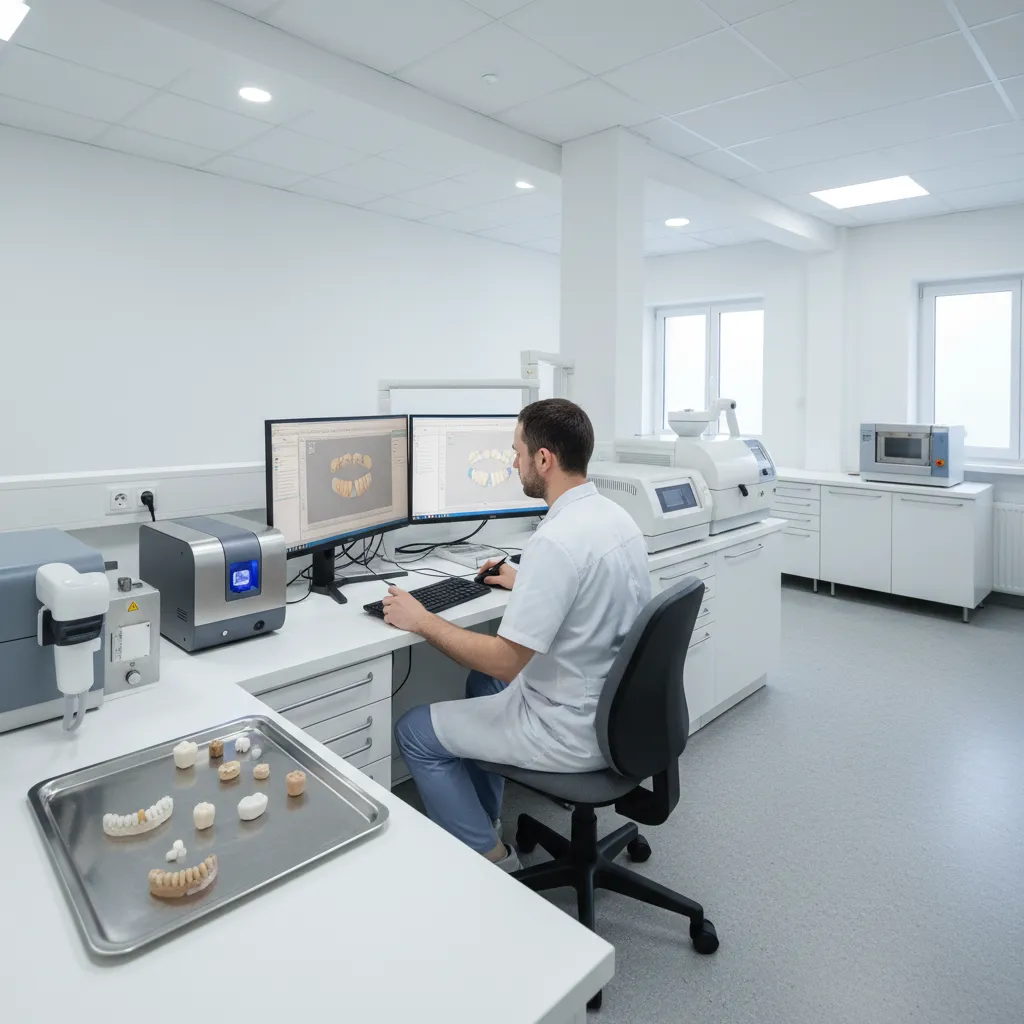
Behind each crown fee is a series of material, design, and lab workflow decisions that shape your final lab invoice.
1. Material and design choices
- Material class: Monolithic zirconia, lithium disilicate, porcelain-fused-to-metal, full metal and hybrid options all carry different CAD/CAM and bench-time requirements.
- Monolithic vs layered: A posterior monolithic zirconia crown with standard staining is very different from a hand-layered anterior restoration with characterisation and custom shade photos.
- Implant vs tooth-borne: Custom Ti bases, angulated screw channels and verification jigs all add design time, components and labour.
2. Workflow: analogue vs digital
- Impression source: Intraoral scans with clean margins and stable bites move straight into CAD, while distorted PVS impressions demand extra stone work and bring more remake risk.
- CAD/CAM integration: A lab that runs validated, ISO 13485–aligned digital workflows for crowns and bridges will often have more predictable internal costs case to case, which can translate to more stable pricing for you.
- Communication loops: Every round of “just checking” emails, shade re-takes and late occlusal changes is an uncharged cost somewhere in the system.
3. Case complexity and remakes
- Subgingival margins, deep caries and limited occlusal clearance increase both design time and chairside adjustment time.
- Previous endodontic treatment, cracked tooth syndrome and parafunction often push you toward stronger materials or staged treatment, which changes both lab time and material cost.
- Remakes are the silent killer: a single remake can wipe out the margin on several other crowns that week if they were priced too tightly.
Predictable crown fees start with predictable lab inputs, not the other way around.
A framework for predictable crown fees in your practice
Think of this less as a spreadsheet exercise and more as a clinical protocol: same indications, same lab inputs, same outcomes, same fee. A simple three-step approach works well in digital restorative workflows.
Step 1 – Standardise indications and default materials
Start by writing down your default choices for the most common scenarios you see. For example:
- Posterior tooth-borne crown with good occlusal space → monolithic zirconia.
- Upper anterior crown with high smile line → layered zirconia or lithium disilicate.
- Single posterior implant crown → monolithic zirconia on Ti base.
Work with your lab to confirm which specific materials and workflows they recommend for each of these indications and note the lab fee bands attached to each category. Linking this to a digital workflow guide, such as your lab’s digital lab workflows page, keeps new associates on the same page.
Step 2 – Group restorations into pricing tiers
Next, map those indications into three tiers that make sense clinically and financially. A common structure:
- Tier A – Standard: Monolithic posterior crowns with straightforward occlusion and shade.
- Tier B – Advanced: Anterior crowns and implant crowns without extensive customisation, with moderate aesthetic demands.
- Tier C – Complex: Multi-unit cases, extensive characterisation, functional challenges or repeated chairside visits.
Each tier has a typical lab fee band and a corresponding patient fee, so similar cases land in the same price band instead of being priced ad hoc.
Step 3 – Build a simple crown fee matrix
Once you have tiers, create a one-page matrix that links clinical presentation, material and fee. For example:
| Scenario | Material / Workflow | Tier | Practice fee range* |
|---|---|---|---|
| Single posterior tooth-borne crown | Monolithic zirconia, full digital | A – Standard | Consistent range for most molars |
| Upper anterior crown with high aesthetics | Layered zirconia, custom shade | B – Advanced | Higher, but consistent within this band |
| Single posterior implant crown | Zirconia on Ti base, digital | B – Advanced | Reflects additional implant components |
*Exact fees should be set with reference to your overheads, local market, ADA guidance and your own professional judgment.
Digital workflows and where savings really occur
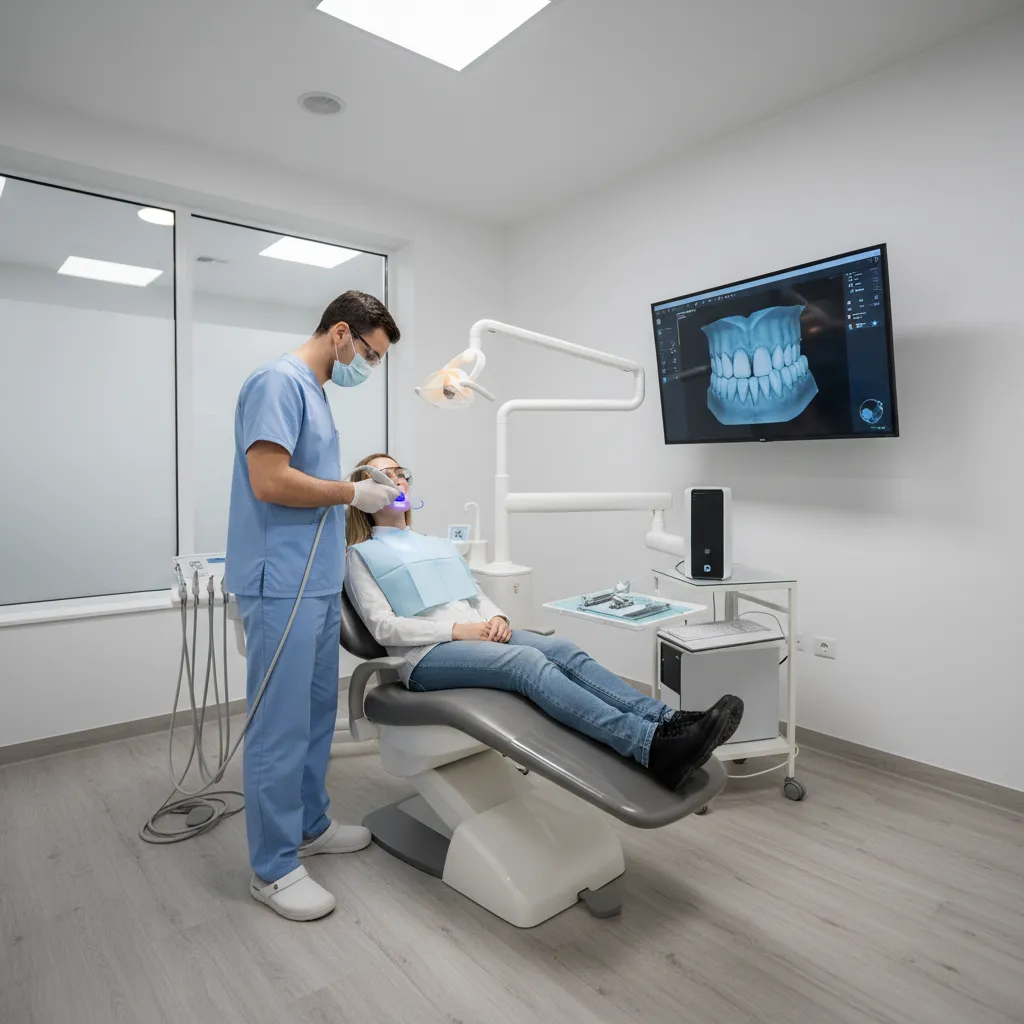
Digital workflows support predictable crown fees by reducing remakes, improving occlusion and streamlining communication with your lab.
Adding intraoral scanning does not automatically cut crown costs. In most practices, the biggest gains come from reduced remakes, more consistent occlusion and faster communication with the lab, rather than from chasing the lowest lab ticket.
For personalised medical devices such as crowns, Australian regulation sets clear quality, safety and record-keeping expectations for both dental labs and sponsors, including for digital and 3D-printed workflows (see the TGA personalised device guidance). Partnering with a lab that understands those TGA obligations, works within ISO 13485 quality systems and appreciates the realities of chairside dentistry gives you confidence that your digital files are turning into consistent devices.
To get the most from your scanner and lab relationship:
- Agree on standard prep designs, margin placement and minimal reduction for each crown material.
- Share a short internal protocol or link to your lab’s scanner integration guide so all clinicians send scans the same way.
- Schedule a quarterly review of remakes and contact/occlusion issues with your lab to keep both protocols and pricing aligned.
Worked example: zirconia crown fees in a Sydney clinic
Consider an anonymised three-chair clinic in Western Sydney using a digital lab for most crowns. Before standardising, single posterior crowns were quoted anywhere from $1,600 to $2,100, remake rates sat at around 6%, and average seat appointments took close to 70 minutes.
After introducing a three-tier matrix with monolithic zirconia as the default for routine posterior crowns and reserving layered ceramics for high-aesthetic cases, almost all single posterior crowns moved to one of two clear price points. Six months later, the clinic still sat within the ADA fee survey band for item 615, but remake rates had dropped to about 2–3% and average seat time had fallen by roughly 10–15 minutes.
FAQs on dental crown pricing language
How much does a dental crown cost in Australia?
The cost of a dental crown in Australia typically ranges from $1,000 to $2,500 per tooth depending on the material used, the complexity of the case, and the dentist’s experience. Zirconia and porcelain crowns generally cost more due to their durability and aesthetics.
Does a front tooth dental crown cost more?
Yes, a front tooth dental crown may cost more because it requires a highly aesthetic finish that closely matches the surrounding teeth. Materials like porcelain or Emax are commonly used for natural looking results.
Why does Google show such a wide range for “teeth cap price” in Sydney?
Consumer facing sites usually quote very broad ranges that mix simple posterior crowns with complex multi-unit cases and implant work. Some, including an independent Australian crown cost, draw on ADA fee survey data, which shows wide variation between clinics.
How much of my fee is usually lab cost?
Many practices anecdotally treat lab charges for indirect restorations as somewhere around 10–20% of the total fee, depending on materials, complexity and local overheads. The exact percentage is less important than ensuring your lab invoices line up with the tiers and materials you have promised in your treatment plan.
How do I explain dental crown cost without sounding defensive?
Patients respond well to simple, honest explanations. For example: “Your crown is in our standard band because it is a single back tooth, and we are using a strong ceramic designed by a Sydney lab based on a digital scan. That fee covers both the lab work and the clinical time today and at your review.”
Should I publish a full crown price list on my website?
Many practices publish a typical fee range with clear notes that diagnosis, complexity and materials influence the final price; others keep full schedules in-house and provide itemised estimates after examination. Whichever model you use, ensure your internal matrix and lab agreements can genuinely support the figures you share.
How NovaDent Labs approaches transparent lab fees
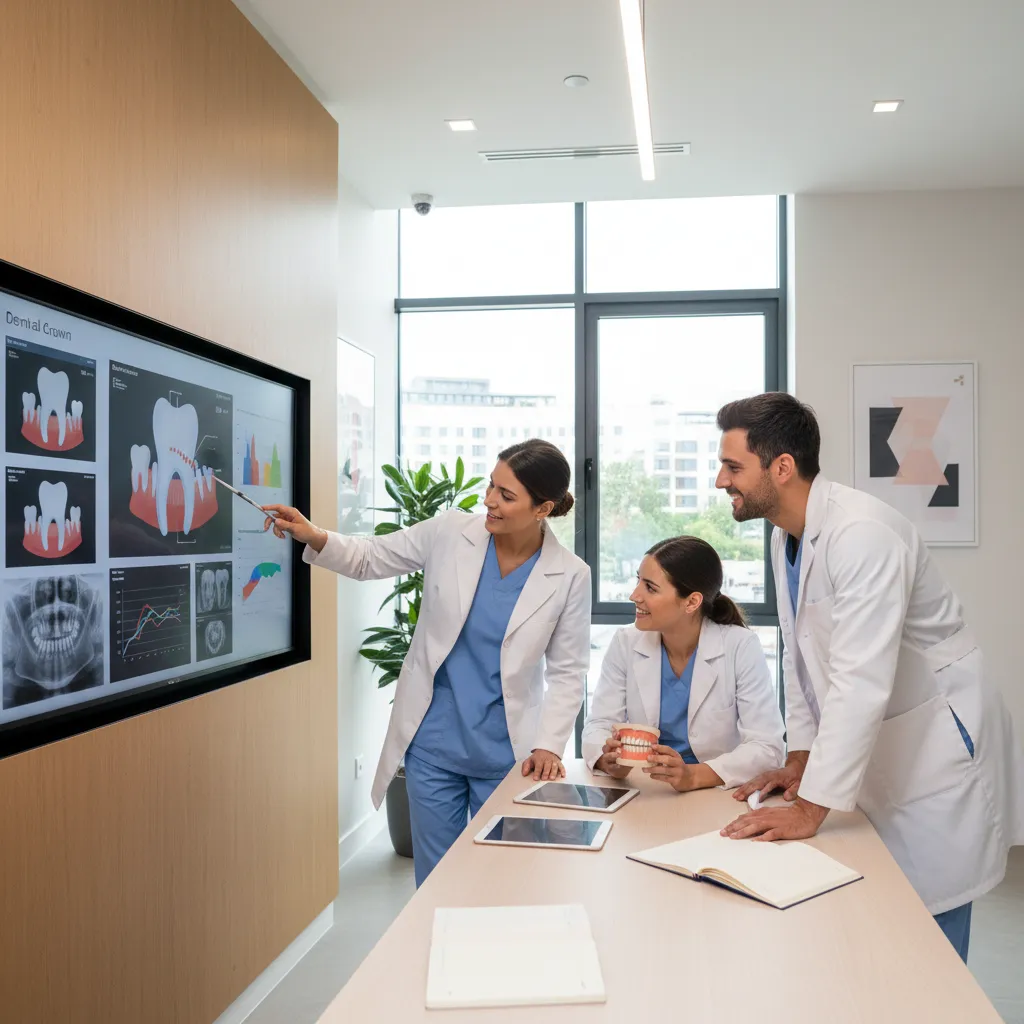
Collaborative planning between clinicians and the lab helps keep dental crown cost frameworks stable and transparent over time.
At NovaDent Labs in Sydney, our goal is to give clinicians fewer surprises and more predictable outcomes. Because our processes are aligned with ISO 13485 and TGA requirements, we can share with you exactly what happens between scan and seat, and how that translates into lab fees. That transparency makes it far easier for your team to build and maintain a fee matrix that feels fair to both practice and patients.
If you are reviewing your own dental crown cost structure or shifting more work into a digital workflow, you can request our current price list or get in touch for case planning support and help tailoring a three-tier matrix to your practice.
Key takeaways for Sydney clinicians
- Anchor dental crown cost to a clear internal framework based on indications, materials and lab tiers, not one-off decisions at the front desk.
- Use digital workflows and a consistent lab partner to reduce remakes and make “standard crown” a meaningful phrase in your practice.
- Keep patient explanations simple: focus on strength, aesthetics, local lab work and long-term function rather than item numbers alone.
Disclaimer: This article is for dental professionals and provides general information only. It does not replace your own clinical judgment, fee-setting decisions, or independent advice on regulatory compliance. It was prepared with the help of AI technology and reviewed by the NovaDent team before publication.
Related Posts
You may also be interested in

How to Find a Premium Dental Lab

Dental Implant Care: The Tooth May Be Artificial, But the Care Is Real
TMJ Splint vs Night Guard: What’s the Difference?

NovaDent Has Arrived.
Previously VTS Dental Labs.
Same team
Same standards
New identity
Visit our new website