

On a busy Monday in Sydney, your hygiene column is packed, a full-arch implant review has been squeezed in, and someone at the front desk asks: “For this dental hygienist vs dentist decision, who should actually see the patient first?” That split‑second judgment call in complex restorative and implant cases shapes chair time, outcomes, and even medico‑legal risk.
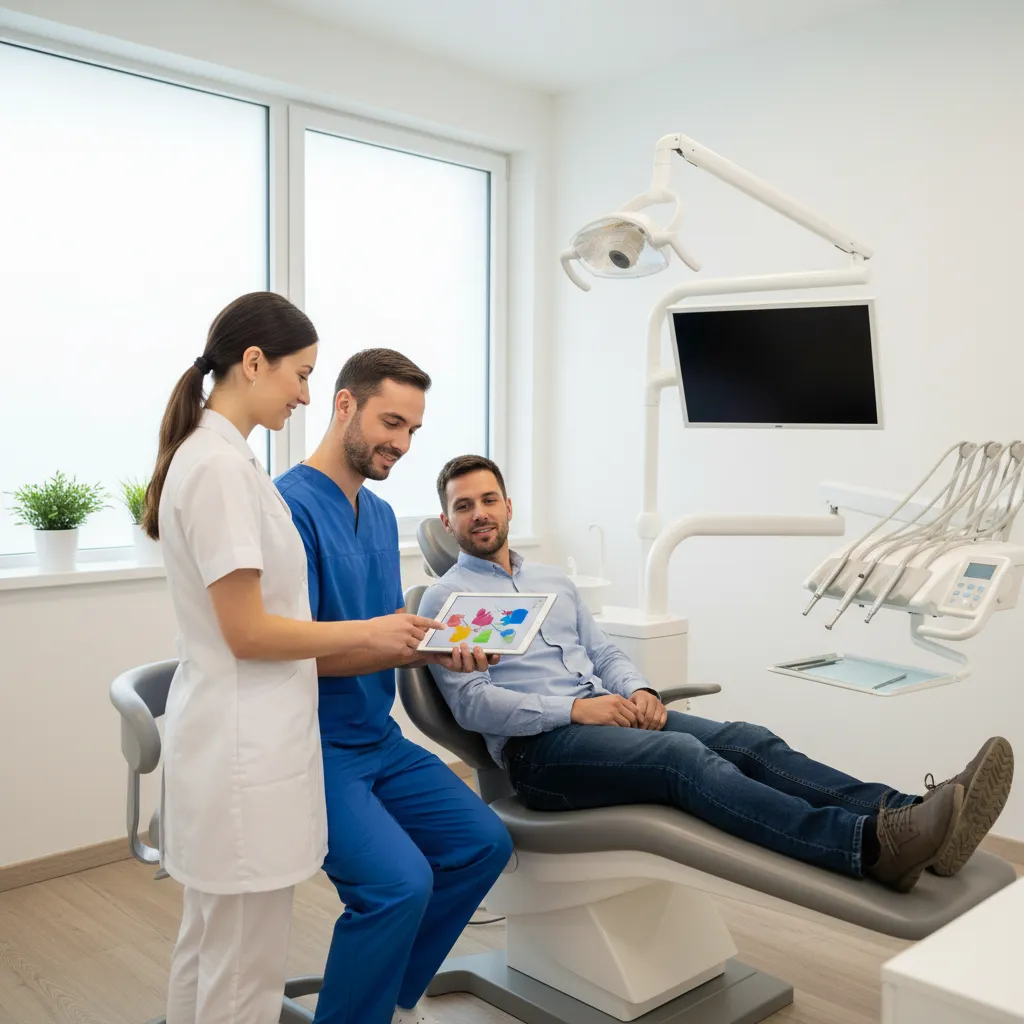
Coordinating the dental hygienist vs dentist role at the very first visit sets the tone for complex cases.
This article offers practical, evidence‑based frameworks so your whole team knows when the dentist leads, when the hygienist (or oral health therapist) takes the reins, and how to stay safely inside Australian scope‑of‑practice rules.
TL;DR for busy clinicians
- Dentists in Australia hold the broadest restorative and implant scope, but hygienists and oral health therapists (OHTs) now practise with their own professional autonomy and responsibility under the Dental Board of Australia’s Scope of Practice registration standard.
- Complex restorative and implant cases run best when dentists own diagnosis, treatment planning, surgery and complex prosthodontics, while hygienists/OHTs lead prevention, peri‑implant maintenance and structured review protocols.
- Clear delegation maps across each phase (pre‑restorative, surgical, early healing, long‑term maintenance) reduce peri‑implant disease risk and chairside surprises.
- Documented protocols, shared data (probing charts, photos, scans) and lab‑ready prescriptions help practices work more efficiently with labs like NovaDent Labs.
1. Regulatory scope in Australia: hygienist vs dentist
Any delegation framework has to sit inside Australian law, not just clinic culture. Under the Dental Board of Australia’s Scope of practice registration standard, dentists may perform any activity within the definition of dentistry, provided they are educated, trained and competent.
Dental hygienists, dental therapists and OHTs, by contrast, have a narrower division‑based scope. The Australian Dental Association (including ADA NSW), in its Scope of Practice Information Sheet, notes that hygienists primarily provide periodontal treatment and preventive services across all ages, while therapists and OHTs add defined restorative scope that still stops short of complex fixed and removable prosthodontics or surgical implant procedures.
Dentist responsibilities in complex restorative & implant cases
- Diagnosis and comprehensive treatment planning for advanced restorative and implant cases.
- Surgical placement of implants or coordination with specialists.
- Design and prescription of definitive crowns, bridges and full‑arch prostheses in collaboration with the lab.
- Management of peri‑implantitis or complications that may need surgical or regenerative intervention.
Dental hygienist / OHT responsibilities
- Assessment, diagnosis and management of periodontal disease within their education and competence.
- Non‑surgical periodontal therapy and supportive periodontal treatment (SPT).
- Peri‑implant assessment, mechanical debridement and maintenance within their scope.
- Risk‑factor counselling (smoking, diabetes, home care) and behavioural support.
- Recognising when findings signal a need for dentist review or referral to a periodontist or prosthodontist.
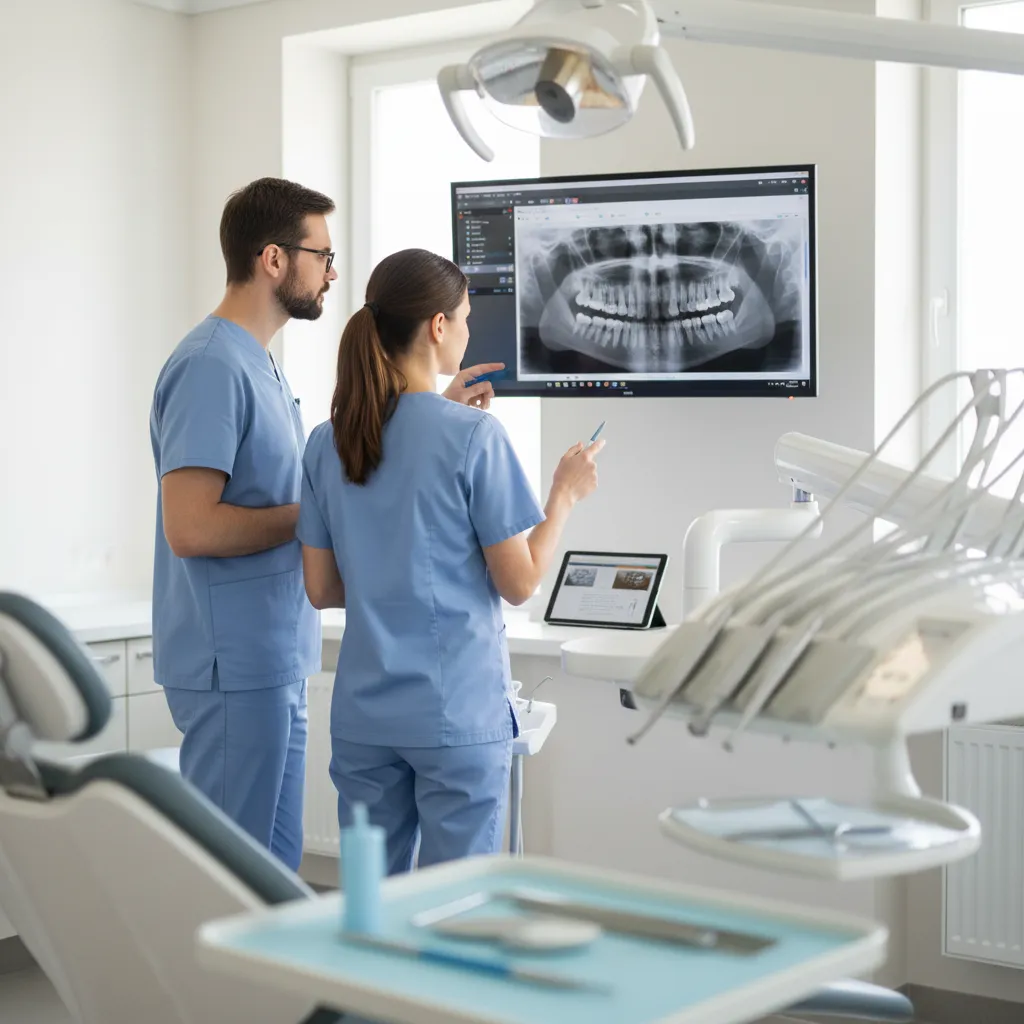
Clarifying scope and delegation between dental hygienist vs dentist keeps complex restorative and implant workflows safe.
Since the 2020 revision of the Scope of practice registration standard, hygienists and other oral health practitioners no longer require a formal “structured professional relationship” with a dentist, yet every practitioner remains responsible for staying inside their own scope. That makes written delegation protocols even more valuable.
2. What the research says about RDH vs dentist roles
When clinicians talk about rdh vs dentist in complex cases, there can be an unspoken fear that delegating too much might dilute quality. The literature points in another direction.
- Randomised studies in general practice show that non‑surgical periodontal therapy delivered by trained dental hygienists using structured protocols can achieve similar pocket‑closure outcomes to conventional approaches; in one multicentre trial of 615 patients, both hygienist‑delivered protocols produced comparable results at 6 months while the single‑visit protocol used less chair time.
- Multiple reviews describe hygienists and therapists as pivotal in peri‑implant maintenance, with supportive care significantly lowering the risk of peri‑implantitis compared with patients who skip regular maintenance; one review reports that patients without structured supportive implant therapy may have more than four times the risk of peri‑implantitis than those enrolled in maintenance programmes.
- Survey data suggest hygienists often schedule and complete re‑evaluations more consistently than dentists, especially in periodontal maintenance programs.
In short: when hygienists work at full scope using clear protocols, outcomes for prevention, SPT and implant maintenance are strong. The dentist’s expertise is still vital for diagnosis, surgical judgement and complex restorative design, but not every review visit needs to be in the dentist’s column.
Hygienists and OHTs should lead prevention, supportive periodontal therapy and implant maintenance – with clear, written triggers for when a case must move back into a dentist‑led lane.
3. A delegation framework for complex restorative & implant cases
Below is a simple four‑phase delegation map that many Sydney and NSW practices can adapt to local team skills and contracts (within Dental Board and ADA guidance).
| Phase | Dentist | Dental hygienist / OHT |
|---|---|---|
| 1. Pre-restorative assessment | Comprehensive exam, radiographs/CBCT as required, overall diagnosis and treatment plan; discussion of restorative options and risk profile. | Full charting, periodontal and peri-implant risk assessment, baseline indices, photos; patient education on disease control before complex work. |
| 2. Disease control & conditioning | Prescribes overall plan and reviews response where needed; decides on timing of restorative or implant placement. | Delivers non-surgical periodontal therapy, reinforces home care, monitors healing; signs off on soft-tissue readiness for restorative/implant phase within scope. |
| 3. Restorative / surgical phase | Tooth preparation, impressions or intraoral scans, implant placement and surgical care, provisionalisation, prescription to lab (materials, design, occlusion). | Pre- and post-op hygiene visits, instructions around temporaries, checks for plaque control and early soft-tissue issues; alerts dentist to red flags. |
| 4. Long-term maintenance | Periodic comprehensive reviews, radiographic assessment, management of complications (fracture, peri-implantitis, occlusal changes). | Leads SPT and implant maintenance at agreed recall intervals (often 3–4 months for higher-risk patients); documents changes against baselines and triggers dentist review when thresholds are met. |

A clear, four‑phase delegation map helps the dental hygienist vs dentist split feel structured rather than ad hoc.
In practice, the same patient may see the dentist intensively during planning, surgery, and fit, then primarily the hygienist or OHT for years of maintenance, with clear triggers for when they “bounce back” to a dentist‑led review.
4. Case scenarios: how this works in real NSW practices
Scenario A: Full‑arch fixed implant bridge
- Before surgery: Dentist and hygienist/OHT co‑assess; hygienist stabilises periodontal status and documents mucosal conditions and plaque control.
- Surgical & prosthetic phase: Dentist (or specialist) places implants and provisional bridge; NovaDent receives scans and prescriptions for a cleansable full‑arch zirconia solution with good emergence profile and access for hygiene instruments.
- Maintenance: Hygienist leads three‑monthly implant maintenance using evidence‑based PMPR protocols and calibrated probing, aligned with current peri‑implant disease prevention and treatment guidelines; any bleeding, suppuration or new bone loss feeds back to the dentist for further investigation.
Scenario B: Quadrant of zirconia crowns on periodontally compromised teeth
- Planning: The dentist plans occlusion, material choice and crown design; hygienist/OHT confirms that local periodontal parameters are controlled enough for new fixed work.
- Delivery: The dentist cements the crowns supplied by the lab; hygienist updates charts and reinforces home care adapted to the new crown contours.
- Ongoing: The hygienist monitors for bleeding on probing around crown margins and reports any recurrent pockets or mobility to the dentist.
5. When lines blur – and how to keep patients safe
No matter how experienced your team is, some “grey zone” questions keep popping up:
- Can the hygienist adjust an implant crown if the patient reports food trapping?
- Who decides when peri‑implant mucositis has tipped into peri‑implantitis?
The Dental Board’s scope‑of‑practice guidance is clear on a key point: every practitioner must personally know and honour their own scope of practice, based on their education, training and competence. When in doubt, the safer path is:
- Hygienist/OHT documents findings with photos, charts and concise notes.
- Dentist reviews and decides whether a quick chairside adjustment, full remake or specialist referral is needed.
- The decision and rationale are recorded in the clinical notes and, where relevant, in the lab prescription.
This shared‑care habit protects patients and the whole team.
6. Bringing your lab into the delegation conversation
Your lab sees the scan, prescription and (if you are lucky) a few photos – not the day‑to‑day work your hygienist is doing around those implants or crowns. Yet these findings should influence design decisions.
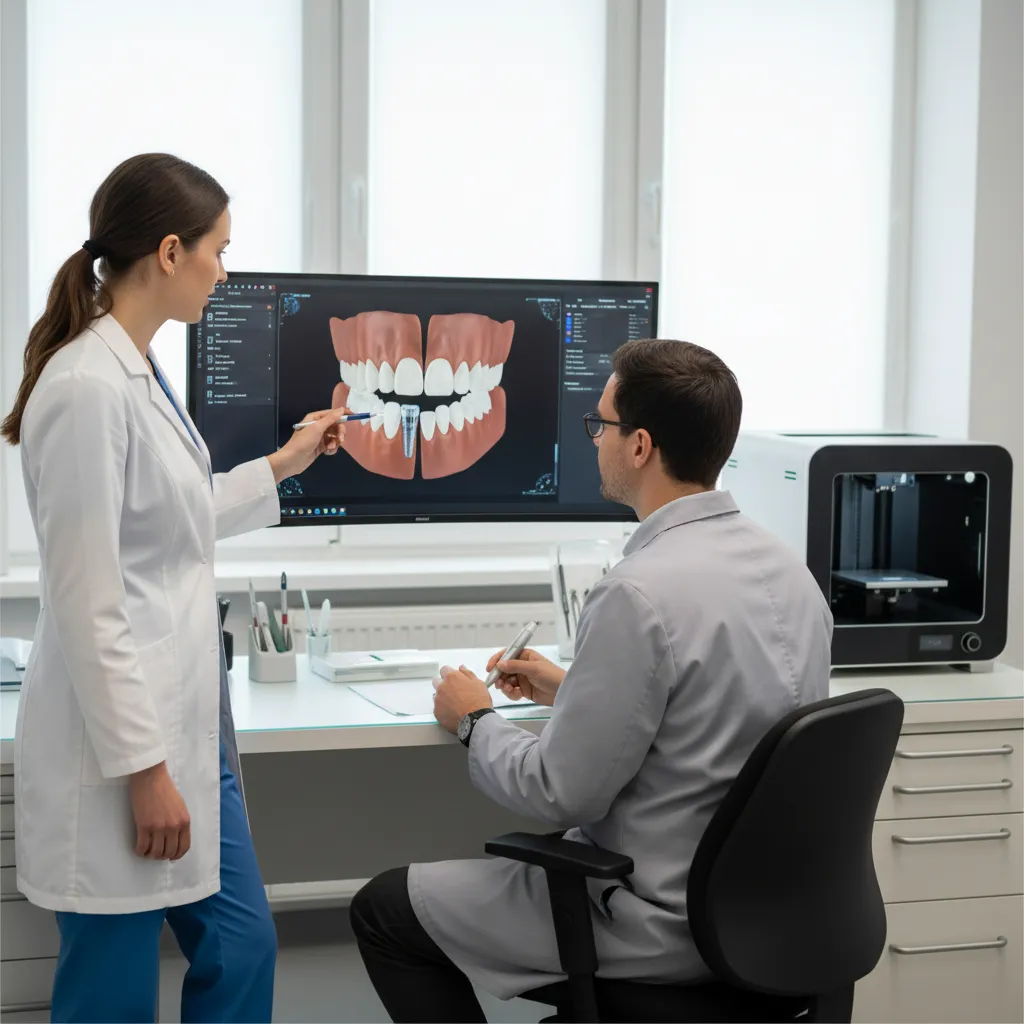
Sharing hygienist observations and dentist plans with the lab closes the loop in complex dental hygienist vs dentist workflows.
Examples of effective team–lab integration in NovaDent partner practices include:
- Hygienist notes cleansability issues around a bridge; dentist and hygienist agree on a re‑design with larger embrasures and smoother emergence before sending the case to NovaDent’s zirconia team.
- Peri‑implant mucositis keeps recurring under a bulky contour; at remake, the dentist includes photos and notes on probe access, while the hygienist suggests instrument access points.
- For high‑risk patients, hygienist photos and charts are attached to the lab portal upload, giving technicians a picture of soft‑tissue challenges.
7. Quick implementation checklist
Over the next month, a Sydney or NSW practice could:
- Review key Dental Board and ADA NSW scope‑of‑practice resources at a clinical meeting.
- Map your own four‑phase delegation chart for complex restorative and implant work.
- Define “trigger criteria” for dentist review (e.g. new bleeding around implants, radiographic bone changes, mobility, chipping or fracture).
- Agree on how hygienist/OHT notes, photos and scans are bundled into lab prescriptions.
- Contact your lab (or contact NovaDent Labs) to confirm design preferences that support long‑term maintenance.
8. Key takeaways
- Hygienist vs dentist is not a turf war. It is a question of matching skill, scope and responsibility at each stage of care.
- RDHs and OHTs shine in prevention and maintenance. Let them lead SPT and implant maintenance within clear, written protocols.
- Dentists remain the clinical leads. Diagnosis, complex restorative design, surgery and complication management stay in the dentist’s lane.
- Structured collaboration with your lab closes the loop. Good prescriptions turn hygienist observations into restorations that are easier to keep healthy.
9. FAQs: dental hygienist vs dentist in complex care
Can a dental hygienist maintain dental implants without a dentist present in Australia?
Yes, dental hygienists and OHTs in Australia are registered practitioners with their own scope and responsibility. They can assess peri‑implant tissues and provide maintenance within their education and competence. They must, however, stay within the Dental Board of Australia’s Scope of practice registration standard and refer or involve a dentist whenever the diagnosis or treatment required lies beyond that scope (for example, suspected peri‑implantitis needing surgical intervention).
Who should manage peri‑implant mucositis – hygienist vs dentist?
Peri‑implant mucositis is typically reversible with effective biofilm control and mechanical debridement, which sits squarely in a hygienist/OHT skill set. The dentist should still set the overall plan and review radiographs at defined intervals, but day‑to‑day monitoring and nonsurgical care are usually best led by the hygienist, with clear criteria for when to escalate concerns.
How does the rdh vs dentist split change in regional NSW compared with Sydney?
In regional NSW, hygienists and OHTs often carry more routine and supportive care because access to dentists and specialists is limited. The legal scope is unchanged, but clear shared treatment plans, structured recall systems and defined referral pathways for complex periodontitis or implant complications become even more important.
Related Posts
You may also be interested in

How to Find a Premium Dental Lab

Dental Implant Care: The Tooth May Be Artificial, But the Care Is Real
TMJ Splint vs Night Guard: What’s the Difference?

NovaDent Has Arrived.
Previously VTS Dental Labs.
Same team
Same standards
New identity
Visit our new website