%2520(1).jpeg)

If you’ve ever sat in a waiting room wondering what number will be on the quote, you’re not alone. Patients swap stories about paying $4,000, $7,500 or more for Invisalign, often with no clear sense of why.
This guide covers typical Invisalign price ranges in Australia, what actually drives those fees, how single-arch (top or bottom only) treatment is priced, and how health insurance and payment plans come into play. It’s written in plain language for patients, but is also designed to help dentists and orthodontists explain fees with confidence.
TL;DR
- Overall range: very minor cases often start around $2,500–$4,000, most full Invisalign cases sit roughly between $4,000–$9,000, and complex cases can be higher, depending on what is included.
- Top teeth only or bottom teeth only: often 10–25% lower than treating both arches, when clinically appropriate.
- Private health extras: orthodontic cover can reduce your Invisalign bill, but waiting periods and limits mean you’ll usually still pay part of the fee yourself.
How much is Invisalign in Australia? Average costs in 2026
There’s no single “set” Invisalign price in Australia. Invisalign is a doctor directed, customised treatment plan, so each clinic sets its own fees based on case complexity, chair time, and what’s bundled into the package (scans, reviews, retainers and so on).
Published fee guides from Australian practices place most full-arch Invisalign treatment between roughly $4,000 and $9,000, with simple cosmetic cases at the lower end and complex bite corrections at the top.
| Case type (example Invisalign package) | Typical scenario | Approx. cost range (AUD) | Typical duration |
|---|---|---|---|
| Express / i7-style | Very minor front-tooth crowding/spacing | $2,500 – $4,000 | 3–6 months |
| Lite / mild case | Mild crowding, mainly aesthetic changes | $4,000 – $5,500 | 6–9 months |
| Moderate | Moderate crowding/spacing, some bite correction | $5,500 – $7,000 | 9–12 months |
| Comprehensive / complex | Significant crowding, rotated teeth and/or jaw issues | $7,000 – $9,000+ | 12–18+ months |

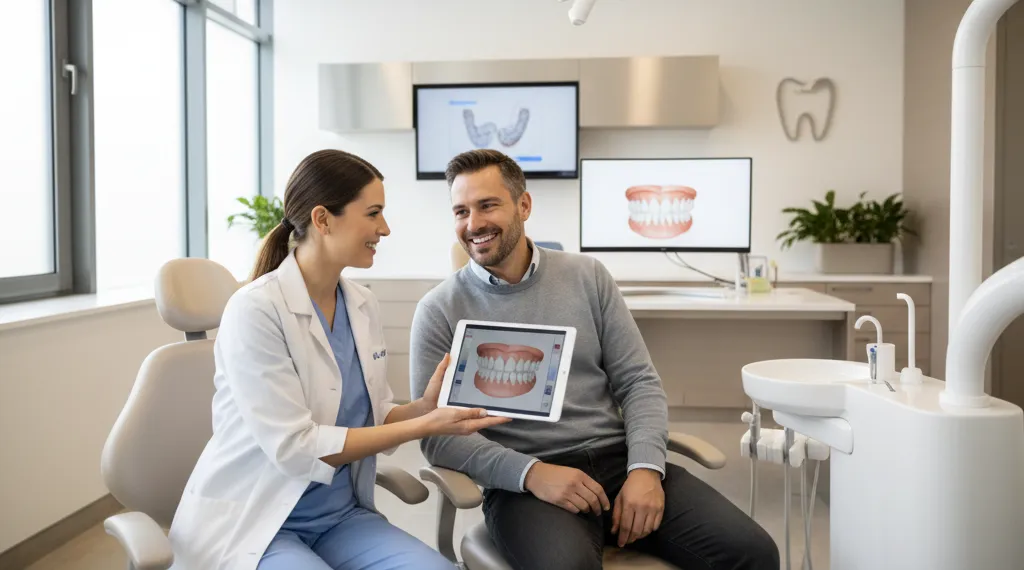
Many patients sit down with quotes, calculators and payment options to understand their Invisalign investment.
City to city differences also exist. Published fees often show Sydney and Melbourne at the higher end of these ranges compared with some regional areas, reflecting rent and staffing costs rather than different aligners.
The most accurate way to know your fee is still a clinical assessment, usually with 3D scans and photos.
What actually drives Invisalign pricing?
Invisalign fees in Australia bundle a complete orthodontic service diagnosis, planning, reviews and retainers not just a box of plastic trays.
1. Complexity and length of treatment
The more your teeth and bite need to change, and the longer treatment runs, the more aligners, planning and review visits are required. Very minor front tooth tweaks may use only a few trays over several months; deep bites, crossbites or multiple rotated teeth can need many stages over 12–18 months or more, which pushes fees higher.
2. Full-arch vs single-arch treatment
Treating both arches (top and bottom) costs more than treating a single-arch, but orthodontists often still recommend full-arch treatment so the bite functions properly once teeth are moved. More on single-arch pricing in the next section.
3. Dentist vs orthodontist, and their experience
Fees can differ between a general dentist and a specialist orthodontist. Practices with extensive Invisalign experience and strong digital workflows often charge towards the upper end because of the time invested in planning, refinements and follow up.
4. What’s included in the package
Two quotes with the same headline fee can include very different line items. Common inclusions are:
- Initial consultation and 3D digital scans.
- Clinician treatment planning time and simulation review.
- All Invisalign aligners for the planned course, including refinements.
- Attachment placement, interproximal reduction (IPR) where needed, and emergency visits.
- Post treatment retainers and review visits.
Some clinics bundle all of this into a single fee; others separate retainers or extended refinements as extras. Comparing inclusions item by item gives a clearer picture than headline numbers alone.
5. Technology and lab support behind the scenes
While Invisalign aligners are manufactured by Align Technology, Australian clinics rely on digital workflows and dental labs for related appliances, retainers and restorative work. Fully digital practices that use intraoral scanners and integrated lab connections often pay more up front for technology but gain accuracy and fewer remakes.
At NovaDent Labs, we connect with iTero, Primescan and other scanners so clinicians can send digital files directly to the lab for aligner related appliances, retainers and restorative work that fit with orthodontic plans.
How much is Invisalign for top teeth only or bottom teeth only?
Many adults ask whether they can “just fix the top” or “only tidy the bottom crowding” to cut costs. Single-arch Invisalign can be an option if your bite and jaw relationship allow it, but it needs careful assessment.
When single-arch treatment is suitable, the fee is often around 10–25% lower than a comparable two-arch case, not half the price. Your dentist or orthodontist still needs to plan tooth movement in three dimensions, protect how the teeth meet, provide review visits and supply retainers you mainly save on the extra aligners for the second arch.
If you’re a clinician, digital simulations can help show when single-arch treatment is safe and when it isn’t.
Is Invisalign cheaper or more expensive than braces and other clear aligners?
For most Australian patients, Invisalign sits in a similar overall range to modern braces when you compare like for like cases and inclusions. Metal braces can be a little cheaper in some clinics; ceramic or lingual braces can be higher because of extra materials and chair time.
Other clear aligner brands including lab made aligners that dentists prescribe outside the Invisalign system may be priced lower or higher depending on how they’re produced, the experience of the provider, and whether lab fees, refinements and retainers are bundled. For clinicians working with a digital lab partner, consistent case planning and CAD/CAM design often matter more than the logo on the box.
For patients, the bigger question is usually value: comfort, appearance during treatment, predictability, and how well the result is maintained long term, rather than a few hundred dollars either way.
Insurance, Medicare and payment options in Australia
Private health insurance extras and orthodontic limits
In Australia, Invisalign is usually only claimable under extras (ancillary) cover in an orthodontics category. Health funds set three key limits:

Checking orthodontic limits and waiting periods with your health fund can clarify how much of your Invisalign cost is covered.
- Waiting period – often 12 months before you can claim.
- Annual limit – maximum orthodontic benefit you can claim each year.
- Lifetime limit – total orthodontic benefit per person.
Because of these waiting periods and limits, most people will still pay a gap for Invisalign even with orthodontic extras cover, so it’s worth checking your policy or calling your fund before you start treatment.
Medicare and public schemes
Standard Medicare does not cover routine Invisalign or most orthodontics, and while the Child Dental Benefits Schedule helps with basic dental care for eligible children and some cleft or craniofacial conditions may receive limited support through specific Medicare items or hospital based programs, these are exceptions rather than the rule.
Practice payment plans and finance
Most Australian orthodontic practices now offer staged payment options, such as:
- Interest free in house payment plans over 12–24 months.
- Third party providers that spread fees weekly or fortnightly.
- Splitting payments across calendar years to use extras limits more effectively, when clinically reasonable.
For dentists: lab support, digital workflows and treatment outcomes
For clear aligner cases, a digital lab partner reduces remakes and saves chair time.
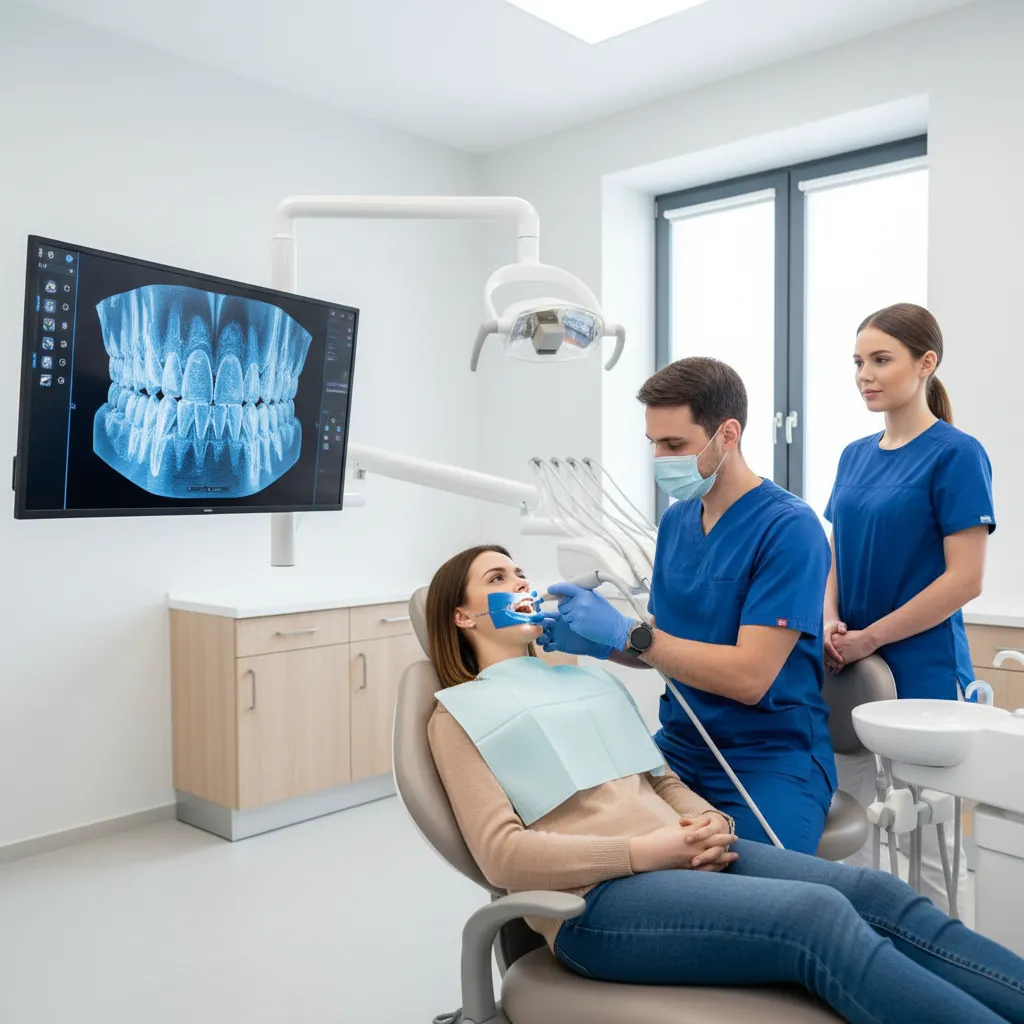
Modern digital workflows and scanner to lab connections support predictable Invisalign and clear aligner outcomes.
- Direct iTero, Primescan, Auralscan and other scanner connections.
- CAD/CAM design focused on long-term occlusion.
- Clear turnaround targets and RX info.
- Case planning support for dentists and specialists.
FAQs
How much is Invisalign for a simple case in Australia?
Simple Invisalign cases are usually at the lower end of the national $4,000–$9,000 range explained above.
Why did one clinic quote $4,500 and another $8,000 for what seems like the same Invisalign?
Larger price gaps usually reflect differences in case complexity, what’s included in the package (scans, refinements, retainers), how often you’re reviewed and each practice’s overheads, not just the number of trays. Asking each clinic for a concise written breakdown of inclusions helps you compare like with like.
Is Invisalign cheaper if I’m only treating one arch?
Sometimes. When your bite allows safe single-arch treatment, it is usually a little cheaper than treating both arches, but it is not half price because most of the planning, monitoring and retention work is the same. See the section on single-arch Invisalign above for more detail.
Can health insurance cover all of my Invisalign costs?
Almost never: orthodontic extras usually only cover part of the fee because of waiting periods and limits.
Are mail order aligners a cheaper equivalent?
Mail order aligners may be cheaper but involve much less in person diagnosis and follow up than supervised Invisalign.
What questions should I ask at an Invisalign consultation?
Helpful questions include:
- “Where does my case sit, mild, moderate or complex and why?”
- “Is single-arch treatment an option for me, or would that harm my bite?”
- “Exactly what is included in this fee: scans, refinements, retainers, emergencies?”
- “How many visits should I expect, and what happens if the result needs tweaking?”
- “Can you provide a written quote with item numbers for my insurer?”
Related Posts
You may also be interested in
.png)
How to Find a Premium Dental Lab

Dental Implant Care: The Tooth May Be Artificial, But the Care Is Real
TMJ Splint vs Night Guard: What’s the Difference?

NovaDent Has Arrived.
Previously VTS Dental Labs.
Same team
Same standards
New identity
Visit our new website