%2520(1).jpeg)
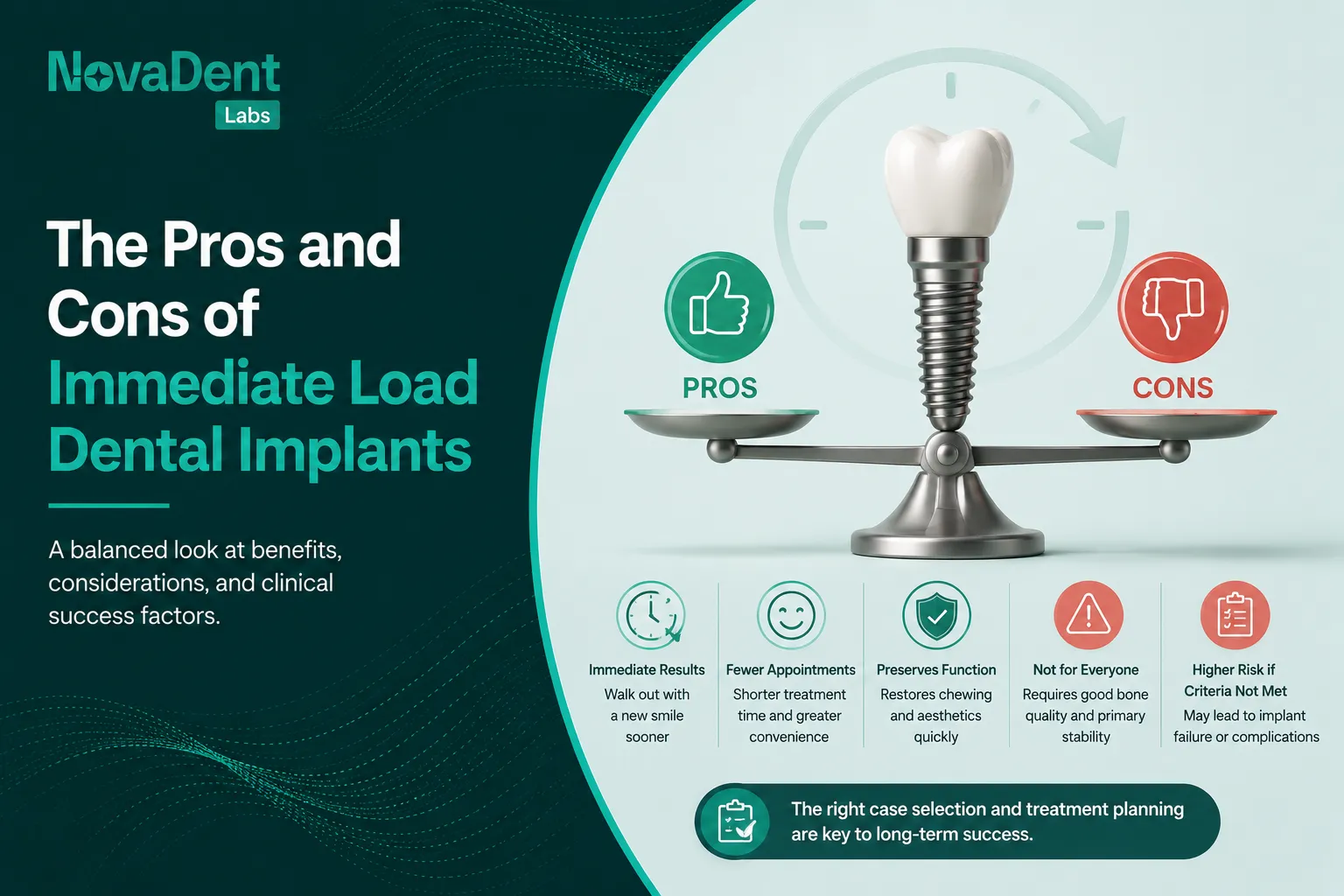
In some cases, patients sit up after implant surgery with a fixed provisional already in place. The appeal is clear: fewer appointments, faster function and happier patients. At the same time, every clinician has heard of early failures when a case was pushed too far or the provisional design was off. This article outlines the practical pros and cons of immediate load implants from a clinical and laboratory perspective, so you can match the protocol to the right patients and protect outcomes. For a broader overview of how we support implant cases, see our implant services.
Immediate load implant planning combines clinical assessment with digital treatment visualisation for patients.
TL;DR
- Definition: implants restored within one week of placement, often in occlusion.
- Main upside: fewer visits, faster function, soft tissue shaping and strong patient satisfaction.
- Main downside: higher risk of early failure if primary stability, occlusion or case selection are off, as highlighted in a clinical review of immediate implant loading complications .
- Evidence: under well controlled conditions, long term survival can approach conventional loading, according to a systematic review of immediate loading survival rates .
- Best used for: carefully selected patients with good bone, controlled occlusion and tight lab clinician coordination.
Evidence at a glance
- A systematic review of 5,349 immediately loaded implants with at least 5 years’ follow up reported a weighted mean survival of about 97% and typical marginal bone loss in the 0.3–1.7 mm range.
- Within that dataset, mandibular implants showed slightly higher long term survival than maxillary implants under immediate loading, underscoring the importance of careful case selection in softer bone.
1. What are immediate load implants?
Definition and terminology
In most consensus documents, immediate loading means the implant is connected to a restoration within one week of placement, usually in occlusion with the opposing arch, as outlined in the ITI consensus statement on implant placement and loading protocols . For practical planning it helps to distinguish immediate loading from immediate restoration (out of occlusion), early loading and conventional loading, summarised below.
Comparison of common implant loading protocols.
| Protocol | Timing of prosthesis | Typical indications | Key benefits | Main risks or limitations |
|---|---|---|---|---|
| Immediate loading | Within 1 week, usually in occlusion | Selected single units, short spans, full-arch cases with high stability | Rapid function, fewer appointments, early soft-tissue support | Higher sensitivity to stability, occlusion and provisional design |
| Immediate restoration | Within 1 week, out of occlusion | Anterior aesthetic cases with carefully selected patients | Soft-tissue support and aesthetics with reduced functional load | Still dependent on primary stability; limited functional improvement |
| Early loading | 1 week to 2 months | Most straightforward healed sites or minor grafted sites | Balances patient convenience with biological safety margin | Requires disciplined follow-up and occlusal control |
| Conventional loading | After >2 months of healing | Compromised bone, extensive grafting, complex systemic profiles | Greatest biological safety margin and evidence base | Longer edentulous period, more visits, delayed function |
Immediate load dental implants can be used for single units, short spans or full arch fixed cases such as All‑on‑4–type restorations, provided case criteria are satisfied, in line with the ITI consensus statement on loading protocols for fixed prostheses in edentulous jaws . For background on implant supported restorations generally, see our overview of implant restorations for Australian practices.
When clinicians consider immediate loading
Common scenarios include:
- Anterior single tooth loss in an otherwise healthy, low risk patient.
- Full arch edentulous cases seeking “teeth in a day” style treatment with cross arch splinting.
- Patients travelling long distances who benefit from fewer surgical visits.
- Cases where soft tissue support and aesthetics would benefit from a fixed provisional contour from day one.
2. When is immediate loading a good option?
Stripped of marketing, immediate loading hinges on selection and control. In well selected cases, survival can be similar to early or conventional loading, but only when core clinical criteria are respected.
Systemic and local factors
- Healthy or well controlled systemic status (especially diabetes, osteoporosis and smoking).
- Favourable bone volume and density at the site (D1–D2, selected D3 with modified drilling).
- Intact or manageable socket walls when placing post extraction implants, as recommended in the ITI consensus statement on immediate implant placement and loading in the maxillary aesthetic zone .
- No active, uncontrolled periodontal or peri‑radicular infection.
Occlusion and parafunction
A technically immaculate implant can still fail under poorly controlled load. Before committing to immediate loading, consider:
- Parafunction (bruxism, clenching) and available strategies for load reduction.
- Anterior guidance and existing occlusal scheme.
- Whether you can design a light, mutually protected occlusion or keep the provisional out of contact.
For more on digital pre‑planning of these variables, you can review our notes on digital dentistry workflows.
3. Pros of immediate load dental implants
3.1 Patient satisfaction and fewer appointments
From a patient’s point of view, “walk in without teeth, walk out with teeth” is compelling. A fixed provisional:

For suitable cases, immediate load implants can restore appearance and confidence in a single visit.
- Quickly restores appearance and basic function.
- Often avoids or shortens a removable provisional phase.
- Can reduce total visits, especially for full arch cases.
3.2 Soft tissue shaping and aesthetics
In the anterior maxilla, immediate provisionals help support papillae and sculpt the emergence profile from day one. Well designed provisionals can reduce later soft‑tissue adjustments and make final shade and contour matching more predictable.
3.3 Practice efficiency and positioning
With appropriate training and lab support, immediate loading can streamline workflows:
- Combining extraction, implant placement and provisionalisation in a single, guided visit.
- Positioning the practice as a convenient option for time poor or anxious patients.
4. Cons and clinical risks
4.1 Dependence on primary stability
The main biological risk with immediate loading is overloading a fixture that lacks sufficient primary stability. If stability feels borderline at placement, immediate loading markedly increases the chance of early failure. In those situations, stepping back to an early or conventional protocol to protect osseointegration is usually safer.
4.2 Higher sensitivity to prosthetic design
With immediate loading, design errors are amplified while the implant bone interface is still organising:
- Excessive cantilevers and long distal extensions increase load.
- High or unadjusted occlusal contacts causing repeated micro trauma.
- Inadequate cross arch splinting in full arch cases.
These factors sit at the surgery lab interface, which is why clear communication and repeatable workflows are critical.
4.3 Not suitable for every patient
Even when patients ask whether an immediate protocol is possible, the honest answer is sometimes “No”. Patients who fall outside the selection criteria in Section 2 for example because of uncontrolled systemic disease, inadequate bone or severe parafunction are usually safer with early or conventional loading. Pushing immediate loading in these situations increases the risk of osseointegration related implant complications and early failures.
5. Biomechanics: stability, torque and design
5.1 Primary stability metrics
Across systematic reviews and consensus papers on immediate loading protocols, high primary stability is consistently identified as non‑negotiable for predictable outcomes. Many protocols therefore look for a combination of adequate insertion torque (often ≥35 Ncm), favourable ISQ values when available, and engagement of cortical bone with sufficient implant length.
5.2 Implant design, arch and bone quality
Tapered implants with aggressive threads and micro roughened surfaces are often favoured for immediate loading, especially in softer bone. The arch also matters: mandibular full arch immediate loading, with denser bone and cross arch stabilisation, is generally more forgiving than a single free standing posterior maxillary unit.
When splinting multiple fixtures with a one piece provisional, use a digital wax up with your lab so bar thickness, connector dimensions and cantilever length stay within safe ranges. Our team at NovaDent routinely supports this through digital case planning and guided surgery workflows.
“Immediate loading works best when you combine high primary stability with conservative occlusion and a tightly coordinated digital lab workflow.”
6. How lab collaboration shapes immediate loading outcomes
For immediate load cases, your lab isn’t just “making the teeth”; it is helping to control risk at each step. A few practical touchpoints:
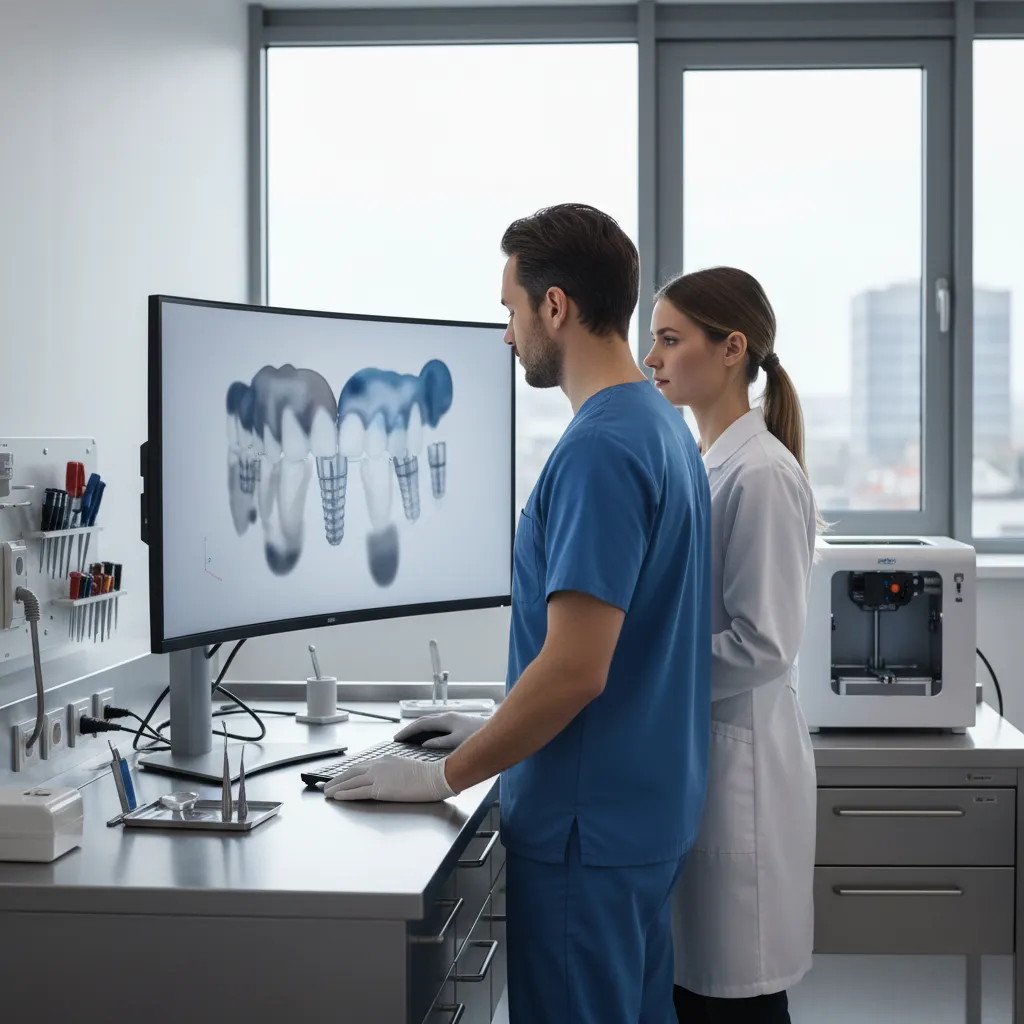
Close coordination with a digital dental lab helps control biomechanics and provisional design for immediate loading.
6.1 Digital planning and guided surgery
Sharing full arch CBCT data, intraoral scans and photos allows the lab to:
- Suggest prosthetic driven implant positions and angulations.
- Design and manufacture surgical guides for more precise placement.
- Prepare prefabricated provisionals or PMMA prototypes before surgery day.
This type of workflow is consistent with consensus recommendations that emphasise planned insertion torque, bone engagement and cross arch stability for immediate loading. You can read more on the role of CAD/CAM and guides in our digital case planning.
6.2 Provisional design, occlusion and materials
Thoughtful provisional design reduces load without undermining patient confidence:
- Narrow occlusal tables with shallow cuspal inclines.
- Light centric contacts and minimal or no excursive contacts.
- PMMA or reinforced acrylics with adequate thickness and metal reinforcement when indicated.
A lab that understands your preferred implant systems and components can standardise these choices so that you have predictable handling on the day.
6.3 What NovaDent Labs typically needs from you
- Complete records: recent CBCT, intraoral scans and photos showing smile lines, lip dynamics and soft tissue contours.
- Clear indication of loading protocol (immediate, early, conventional) and torque/ISQ targets.
- Material preferences and any restrictions from the patient’s medical or parafunctional profile.
7. When to prefer early or conventional loading
Evidence from a systematic review of immediate loading survival rates and a Cochrane review comparing immediate, early and conventional loading suggests that immediate loading can match conventional protocols when used within strict indications, but failure rates rise in higher risk situations. Circumstances where you might step back include:
- Borderline bone quality with low insertion torque.
- Extensive grafting performed at the same surgery.
- Posterior extractions with thin residual buccal plates.
- Patients unlikely to follow a soft diet or parafunction control advice.
In these scenarios, a short early loading delay or a conventional three month timeline usually offers a better risk benefit balance.
8. Practical checklist for immediate loading
Think of this as a simple 3 Phase Immediate Load Checklist: pre-operative, surgery day and post operative review.
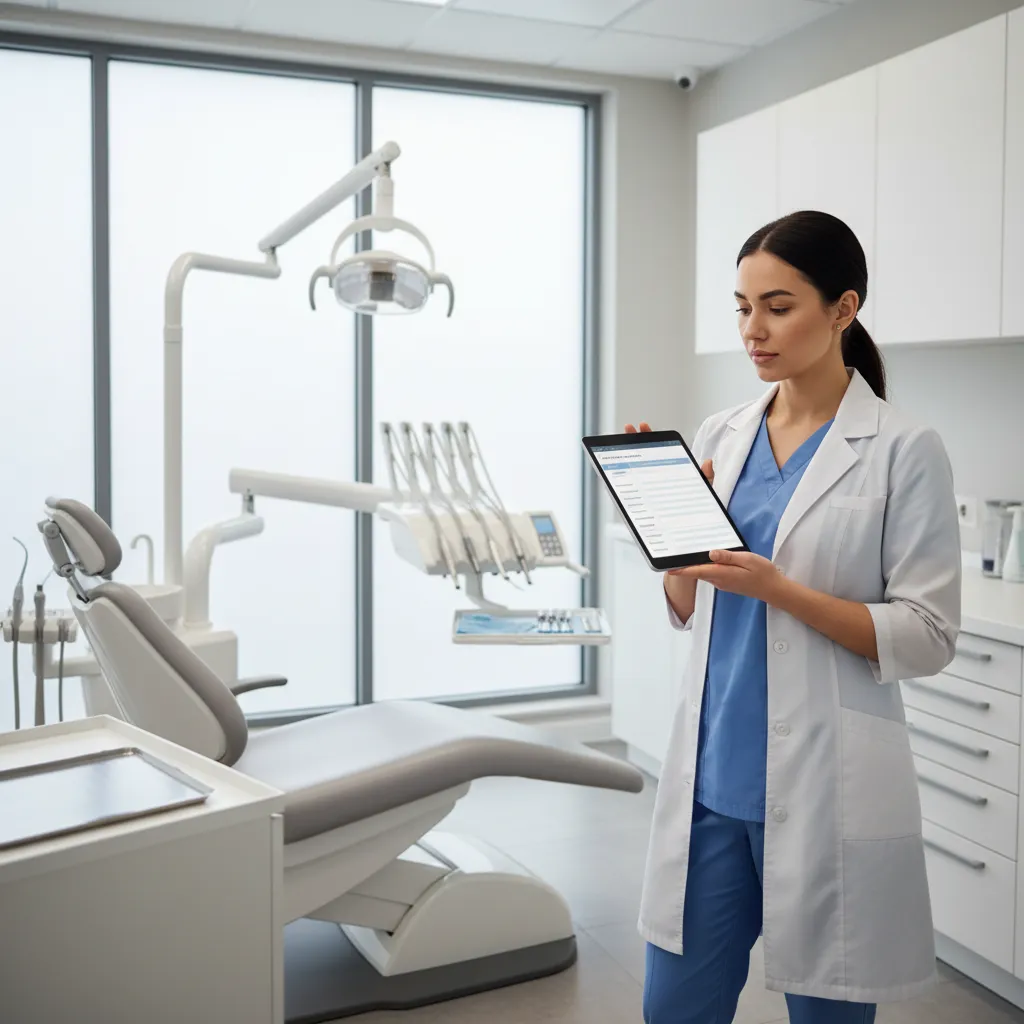
Standardised checklists support consistent pre-operative planning, surgery day execution and post operative review.Three phase immediate loading checklist for implant cases.
- Pre-operative: risk assessment, records and communication with the lab.
- Surgery day: achieve target stability, verify fit and refine occlusion.
- Post operative: early review, monitor healing and plan the definitive restoration.
8.1 Pre‑operative
- Confirm systemic status, smoking history and medications.
- Assess bone volume and quality radiographically and clinically.
- Take intraoral scans and photographs for digital planning.
- Discuss expectations, diet and maintenance with the patient.
- Send full case records to the lab with a clear request for immediate loading.
8.2 Surgery day
- Aim for target insertion torque and stability (with a backup plan if not achieved).
- Verify passive fit of the provisional on multi unit abutments or direct to fixtures.
- Meticulously check and adjust occlusion in centric and excursions.
- Provide clear written post‑op and diet instructions.
8.3 Post‑op and follow up
- Schedule early review to check soft tissue and prosthesis integrity.
- Monitor for pain, mobility or unexpected radiographic changes.
- Plan conversion to the definitive restoration once stability is confirmed.
- Reinforce hygiene and recall intervals as you would for any implant patient.
9. Working with NovaDent Labs on immediate load workflows
As a digital first lab, NovaDent Labs supports immediate loading protocols for both single tooth and full arch cases through:
- Prosthetic driven digital planning and guide design.
- CAD/CAM milled PMMA and other provisional materials designed for controlled loading.
- Compatibility with major implant systems and intraoral scanners.
- Predictable 5–9 business day turnaround on definitive restorations.
9.1 Case vignette: full arch immediate loading (composite example)
Consider a composite mandibular full arch case. A medically stable, non-smoker with failing lower teeth wished to avoid a removable interim prosthesis. Guided planning for four implants achieved insertion torque above 40 Ncm on surgery day, allowing a cross arch PMMA provisional with light centric contacts only. Reviews over the following months showed comfortable function and healthy tissues before conversion to a definitive hybrid restoration.
If you’re weighing whether to offer more immediate load cases in your practice, a good starting point is to standardise your protocol for a narrow set of indications, then expand cautiously as your team and lab develop shared habits and feedback loops.
To see how our pricing and turnaround times fit your implant workflows, you can request our current price list and speak with our team about upcoming cases.
FAQs
Are immediate load dental implants as successful as conventional loading?
In well selected cases with high primary stability and controlled occlusion, survival rates for immediate loading can approach those of conventional protocols. Early failure risk rises when it is used outside recommended indications.
What stability thresholds do you aim for before immediate loading?
Many clinicians look for insertion torque around or above 35 Ncm, ideally with favourable ISQ values, before immediate loading. If these targets are not met, changing to an early or conventional protocol is usually safer.
Can I decide to delay loading on the day of surgery?
Yes. Safe immediate loading means being ready to change the plan intra operatively if stability, bone quality or other risks are less favourable than expected. A defined backup plan for early or conventional loading helps protect osseointegration while still meeting the patient’s goals
Related Posts
You may also be interested in
.png)
How to Find a Premium Dental Lab

Dental Implant Care: The Tooth May Be Artificial, But the Care Is Real
TMJ Splint vs Night Guard: What’s the Difference?

NovaDent Has Arrived.
Previously VTS Dental Labs.
Same team
Same standards
New identity
Visit our new website