%2520(1).jpeg)
.webp)
Patients are asking more often about “metal free” options and scrolling through social media before they ever sit in your chair. So when patients ask about zirconia vs titanium implants and the topic of implant materials comes up, you need a clear, confident way to explain the trade offs and choose the right restoration for each case.
This guide looks at how both materials perform in real world practice aesthetics, biomechanics, peri‑implant health and cost so you can align your treatment planning with what will genuinely serve your patient and your workflow. It is written for clinicians, but it also summarises the key differences patients tend to ask about so you can adapt the language chairside or share it with interested patients.
TL;DR
- Titanium remains the workhorse for most implant cases thanks to its long term data, strength and prosthetic flexibility.
- Zirconia implants and abutments add most value in high aesthetic zones, metal sensitive patients and selected peri‑implant soft tissue situations.
- The best results usually come from smart case selection and close collaboration with your lab, not from backing one material in every case.
A clear consultation helps patients understand the trade offs between zirconia and titanium implants.
The big picture: zirconia and titanium implants
For most clinicians, titanium fixtures are still the default: decades of evidence, versatile prosthetic components and predictable outcomes. Zirconia implants, on the other hand, offer a tooth coloured, metal free alternative that appeals in aesthetic zones and for patients concerned about metals.
Rather than asking which material is “better” in absolute terms, the more useful question is: for this patient, in this site, with this prosthesis, which material gives us the best balance of risk, longevity and aesthetics? That decision is usually driven by load, how the soft tissues should look, and patient lifestyle. A simple LOAD–LOOK–LIFESTYLE framework you can revisit throughout treatment planning.
Material basics: what you are really choosing
Titanium implants in everyday practice
Titanium has been the standard for endosseous implants since the Brånemark era, thanks to its reliable osseointegration, strength and forgiving mechanics. The market offers a wide array of diameters, connections and implant restoration options, so most anatomical and restorative situations can be solved with a titanium based system.
Zirconia implants and components
Zirconia implants are typically made from yttria stabilised tetragonal zirconia polycrystal (Y‑TZP). They are ceramic, white and marketed as metal free, with one piece designs that integrate the abutment and two piece systems with separate abutments. Many clinicians already use zirconia at the restorative level via monolithic zirconia crowns on titanium bases or custom zirconia abutments on titanium fixtures, often supplied through dedicated zirconia prosthetics.
When patients talk about “zirconia implants”, they may be confusing the fixture material with the suprastructure; clarifying which part of the system you are discussing helps set realistic expectations.
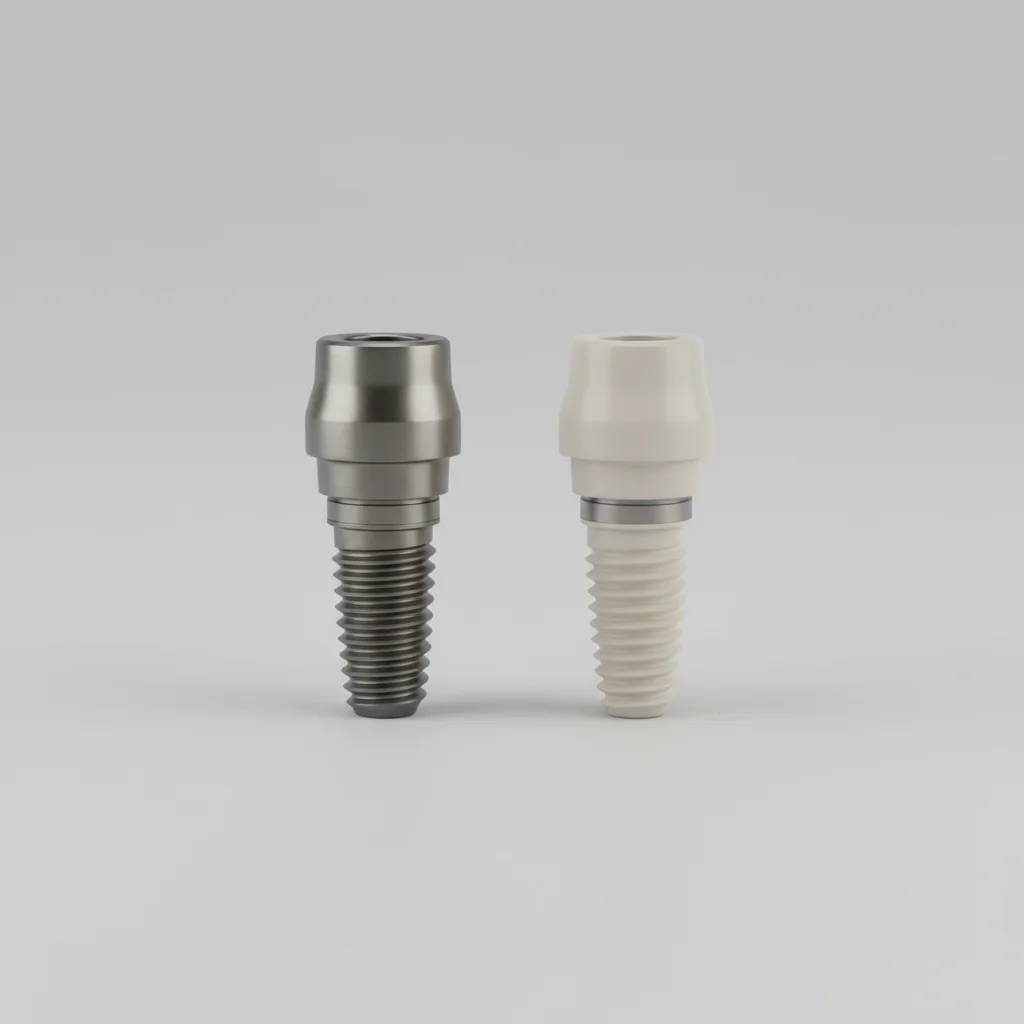
Side by side comparison helps frame when zirconia vs titanium implant components are preferred.
Quick comparison: titanium vs zirconia implants
Aesthetics and soft tissue response
In thin biotypes, every half millimetre of tissue counts. With titanium fixtures and abutments, soft tissue recession or a very thin mucosal curtain can lead to grey show through, especially in high smile line anterior cases. Zirconia’s natural whiteness gives you more forgiveness when the tissue is less than ideal.
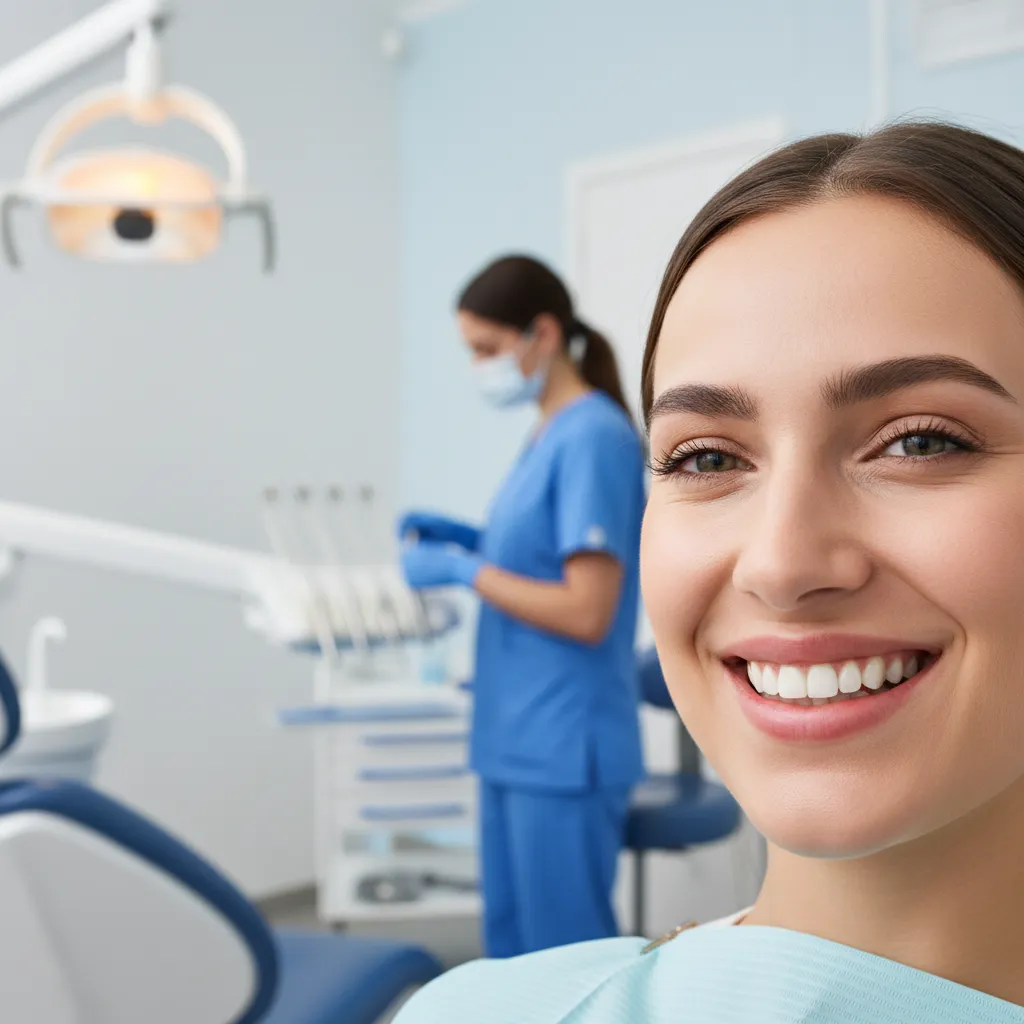
Anterior aesthetics and soft tissue colour often drive the choice between zirconia and titanium implants.
Comparative clinical studies report broadly similar or slightly more favourable soft tissue health around zirconia abutments than titanium, provided plaque control is good.
In everyday planning, many dentists use a hybrid approach: titanium fixtures for their track record, combined with zirconia abutments and crowns in the aesthetic zone to support a natural emergence profile, often fabricated through implant and fixed prosthetic workflows.
Mechanical performance and complications
From a mechanical standpoint, titanium is very forgiving: it tends to bend rather than fracture and is supported by a large ecosystem of prosthetic components. Contemporary rough surface titanium implants show 10 year survival in the mid 90% range with mean marginal bone loss of around 1–1.5 mm, as summarised in a 10‑year implant survival meta analysis, which is why they remain the default for high load posterior sites, long‑span prostheses and compromised bone volumes.
Zirconia is strong but more brittle. Recent meta analyses suggest cumulative survival of roughly 95% at up to 10 years for modern zirconia implant systems, zirconia implant meta analysis, with fractures representing a small proportion of failures, particularly in older, narrow or aggressively adjusted one piece designs. Practical implications include limiting chairside grinding of zirconia fixtures, avoiding long cantilevers, keeping occlusal tables narrow with shallow guidance, and prescribing night guards for heavy bruxers.
Digital planning with a lab that can model occlusal forces and connector dimensions inside your digital dentistry lab workflows helps you stay within each material’s comfort zone and reduce remakes in implant cases.
Biology and peri‑implant health
Both titanium and zirconia are highly biocompatible when manufactured and handled correctly. True titanium hypersensitivity appears rare in clinical practice (well under 1% of patients), but for people with strong metal free preferences or complex histories, zirconia fixtures or zirconia abutments on titanium implants can support case acceptance as long as you explain the smaller evidence base. Comparative studies generally show similar soft tissue attachment and marginal bone levels around zirconia and titanium abutments when home care and maintenance are good.
Long term reviews of contemporary titanium implants report 10 year survival in the mid 90% range with mean marginal bone loss around 1–1.5 mm, while updated systematic reviews suggest modern zirconia implants can achieve cumulative survival of about 95% at up to 10 years with marginal bone loss of roughly 1 mm in selected cases. Large meta analyses such as a recent peri‑implantitis prevalence review indicate peri‑implantitis affects roughly one in five patients (around 20%) and just over one in ten implants (about 10–12%), regardless of fixture material, underscoring that plaque control, maintenance and risk factor management matter more than whether the implant is titanium or zirconia.
Zirconia implants vs titanium cost: what you actually feel in the practice
When dentists weigh cost, they are usually thinking about component prices and workflow efficiency. In many implant systems, zirconia fixtures and custom zirconia abutments are positioned as premium components and are priced above comparable titanium parts, while compatible third party options may be fewer. With NovaDent Labs, you can explore options such as customised abutments and request a current price list so you know exactly where each material sits in your own fee schedule.
On the restorative side, full contour zirconia crowns on titanium bases are now mainstream and cost effective, whereas fully metal free zirconia restorations on zirconia fixtures often demand more planning, try-ins and specific torque protocols. Those extra steps can add time and cost, but may reduce remakes when you keep each material within its comfort zone.
Chairside, it helps to present clear options rather than a vague “upgrade”: for example, a standard titanium plan versus a more aesthetic plan that adds zirconia components where they matter most. Working with your lab (for example via the For Dentists hub) makes it easier to translate component and lab costs into transparent, tiered treatment choices for patients.
Case selection: when each option makes sense
A simple way to frame the decision with patients and your team is the LOAD–LOOK–LIFESTYLE framework: how much load the implant must carry, how you want the soft tissues and smile to look, and how the patient’s lifestyle and maintenance habits will affect long term risk.
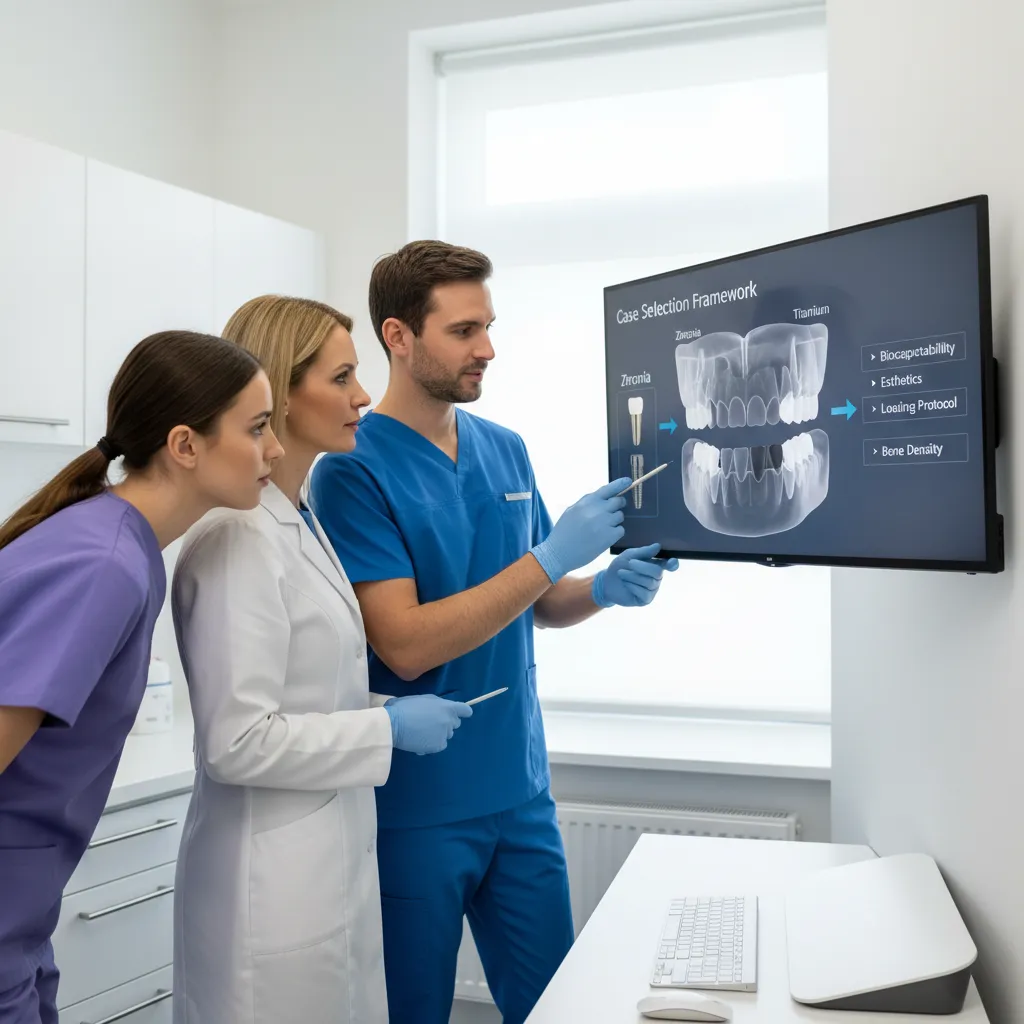
Digital planning supports material choices for zirconia vs titanium implants using a LOAD–LOOK–LIFESTYLE framework.
The LOAD–LOOK–LIFESTYLE framework
- LOAD: Occlusal forces, parafunction, span length and available bone. In demanding biomechanics, default toward titanium fixtures and robust connections.
- LOOK: Soft tissue thickness, smile line and adjacent tooth colour. In high aesthetic zones, consider zirconia at the abutment and crown level, or full zirconia implants in carefully selected sites.
- LIFESTYLE: Smoking, bruxism, home care, recall reliability and attitudes to metals. These factors often tip the balance between a more forgiving titanium solution and a more technique sensitive ceramic option.
When titanium is usually the first choice
- Posterior implants with high functional load or parafunction
- Full arch or multi unit restorations where component choice and adjustability matter
- Sites with limited bone or the need for narrow/short implants where most systems are titanium only
When zirconia can be a strong option
- Anterior maxilla with thin biotype and high smile line
- Patients strongly requesting metal free restorations or with documented metal sensitivities
- Single tooth cases with favourable occlusion and good bone where you want “white on white” aesthetics
Clinical vignettes: matching material to priorities
Think of a 32 year old with a traumatically lost upper lateral incisor and a high smile line: a palatally placed titanium implant restored with a custom zirconia abutment and zirconia crown can protect the buccal contour while avoiding greying. By contrast, for a 55 year old bruxer needing a lower first molar implant, a wide diameter titanium fixture with a screw retained monolithic zirconia crown on a titanium base, adjusted to a flatter occlusion and supported by a night guard, prioritises load management while still delivering durable aesthetics.
How NovaDent Labs supports your implant cases
Whether you place mostly titanium fixtures, trialling zirconia systems, or sit somewhere in between, a consistent lab partner makes a big difference. NovaDent works with the major implant platforms used across Australia and provides:
- CAD/CAM designed titanium and zirconia abutments, including Ti‑base solutions and customised abutments
- Monolithic zirconia, layered ceramics and implant retained prostheses across arches, supported by our zirconia prosthetic range
- Digital case planning using your intraoral scans and CBCT data, plus case‑by‑case material recommendations that respect your preferred implant systems
If you are reviewing your implant offering or adding more zirconia based options, you can contact our team or visit the For Dentists hub to request current implant price lists and example cases.
FAQs
Are zirconia implants better than titanium for metal allergies?
True titanium allergy appears to be uncommon, and most patients tolerate titanium implants well. For individuals with strong metal free preferences or a history that raises concern about hypersensitivity, zirconia fixtures or zirconia abutments on titanium implants can be a reasonable option, as long as you explain that evidence for zirconia is newer and more limited and that careful maintenance is still essential regardless of material.
Do zirconia implants last as long as titanium?
Titanium implants have the most robust long term evidence, with contemporary systems commonly reporting implant survival in the mid 90% range at around 10 years in maintained patients. Zirconia implants show encouraging survival in a similar percentage range over shorter and mid term follow up, but with fewer and more heterogeneous studies, so many clinicians reserve zirconia for cases where its aesthetic or material advantages matter most and treat titanium as the baseline when ultimate longevity is the main priority.
Can I mix titanium fixtures with zirconia abutments and crowns?
Yes. Combining a titanium implant with a custom zirconia abutment and zirconia or porcelain fused to zirconia crown is now routine. When the abutment design, connection and torque protocols are respected, studies report survival and complication rates for zirconia abutments on titanium implants that are comparable to all titanium abutments, making this hybrid stack a practical way to pair mechanical reliability with improved soft tissue aesthetics.
Related Posts
You may also be interested in
.png)
How to Find a Premium Dental Lab

Dental Implant Care: The Tooth May Be Artificial, But the Care Is Real
TMJ Splint vs Night Guard: What’s the Difference?

NovaDent Has Arrived.
Previously VTS Dental Labs.
Same team
Same standards
New identity
Visit our new website