%2520(1).jpeg)
TL;DR
- Anterior cases carry the highest aesthetic expectations, especially when only one or two incisors are missing.
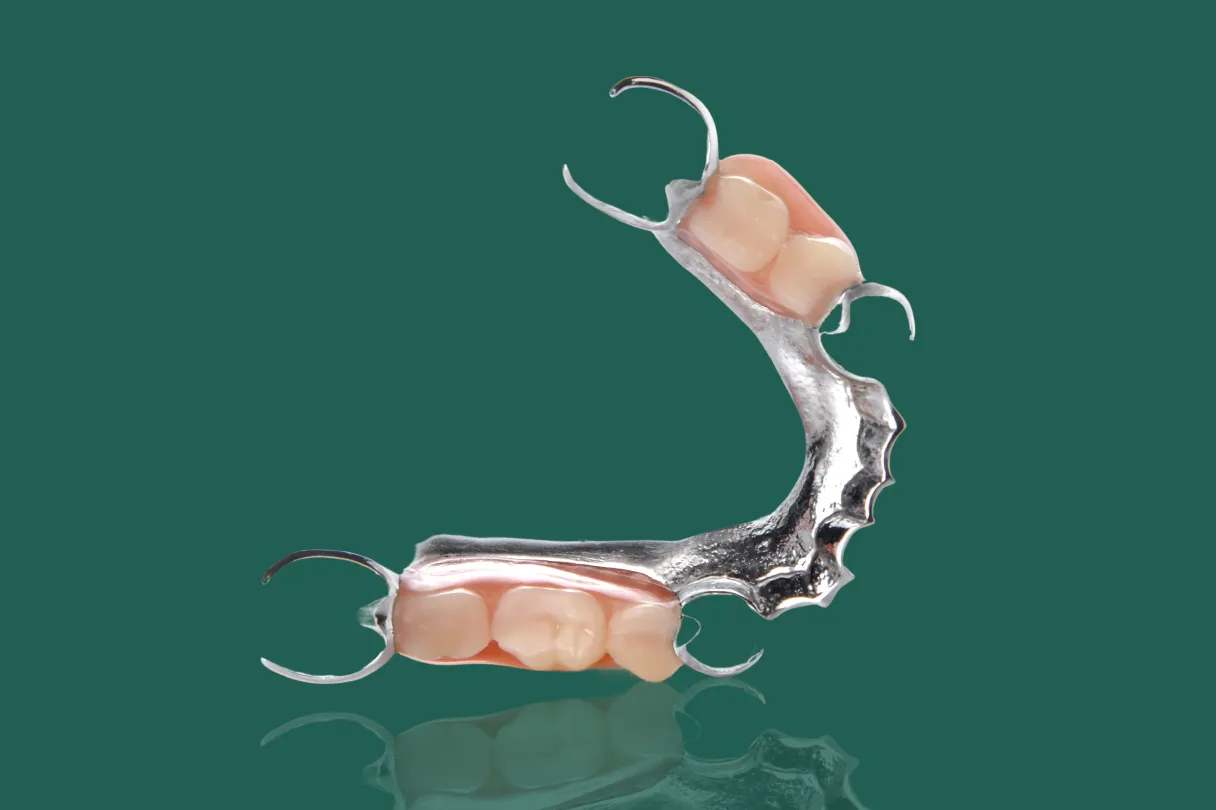
- Front tooth removable partials range from simple acrylic “flippers” to cobalt chromium frameworks, flexible nylon designs and attachment or implant assisted options.
- In Australia, a partial denture for front teeth typically costs more as you move from interim acrylic through to flexible and precision or implant assisted designs.
- Consistent photos, shade information and clear design instructions let a digital lab deliver anterior partials that blend with natural teeth rather than standing out.
What is an anterior partial denture?
A partial denture is a removable prosthesis that replaces one or more missing teeth while preserving the remaining dentition. In the anterior region, that usually means replacing one or several incisors and canines while adjacent teeth provide support and retention via a base, framework and clasps or attachments.
Because these cases restore appearance, phonetics and function in the smile zone, patients often judge them by the same standards as fixed restorations. Design, material choice and lab communication matter more here than with a lower distal extension partial that rarely shows in a smile. For a broader overview of removable designs before zooming in on the anterior segment, see NovaDent’s guide to modern denture types in digital dentistry.
When is a front tooth partial denture a good option?
In day to day practice, anterior partial dentures tend to shine in a few scenarios:
- Immediate replacement after extraction – trauma, root fractures or failed endodontic cases where you need something in the smile zone on day one.
- Transitional prosthesis – keeping the space, shaping soft tissues and managing aesthetics while planning implants, orthodontics or more extensive fixed work.
- Medical or anatomical limitations – systemic conditions, limited bone or complex anatomy where implants or lengthy fixed reconstructions are not realistic.
- Budget limited cases – patients who want an aesthetic result but cannot commit to fixed solutions in the short or medium term.
Many dentists also keep a single tooth “flipper” in their toolkit as an insurance policy for fractured provisionals or unexpected failures in the aesthetic zone, particularly for young patients. For patient facing education around dentures in general, resources such as Teeth.org.au (Australian Dental Association) and Healthdirect Australia provide helpful overviews you can share or reference during consent discussions.
Types of anterior partial dentures
Once you know the clinical scenario and time horizon, the next step is choosing the right partial type. For anterior cases, four broad categories cover most situations.
1. Acrylic “flipper” or interim partial
Acrylic partials are often the workhorse for immediate and short to medium term front tooth replacement. They are typically:
- Constructed from PMMA with wrought clasps or wire for retention.
- Relatively straightforward to adjust and reline.
- Useful for single tooth or small span replacements as a provisional solution.
Downsides include bulk, plaque retention and less refined tissue support compared with cobalt chromium frameworks. For long term service in a high function patient, acrylic alone rarely matches the stability of a Co–Cr design, but it can be an excellent stepping stone while definitive treatment is being planned.
2. Cobalt chromium framework partial
Cobalt chromium (Co–Cr) framework RPDs remain the classic definitive option for many partially dentate patients. Frameworks are tooth-borne, with rests and guide planes that share load more efficiently than tissue borne acrylic bases.*
In the anterior region, key considerations include:
- Clasp visibility: clasp arms on canines or premolars can intrude into the smile zone if the design is not carefully planned.
- Connector design: palatal or lingual connectors need to respect phonetics while providing rigidity.
- Future tooth loss: acrylic saddles around compromised teeth allow easier tooth additions without remaking the entire framework.
NovaDent manufactures precision Co–Cr frameworks for partial dentures, with digital design files available for review before casting. You can learn more about our cobalt chromium framework options when planning definitive anterior cases.
3. Flexible nylon partial (Valplast type)
Flexible partial dentures made from nylon based thermoplastic resins (such as Valplast type materials) offer a different aesthetic profile. The base and clasp extensions are gum coloured and blend with the soft tissues, so there are no metal arms catching the light in a wide smile.*
Flexible anterior partials can work especially well when:
- The patient has a high smile line and is highly conscious of metal showing.
- Soft tissue undercuts favour flexible extensions.
- There is a history of sensitivity or reactions to conventional acrylic monomers.
They need careful case selection and design, as they are tissue borne and have limited options for relines. NovaDent provides Valplast flexible partial dentures for Australian practices, with case planning support for anterior aesthetics and clasp positioning.
4. Precision attachment or implant assisted partial
At the more advanced end are partials that use precision attachments, crowns or a small number of implants to hide connectors and improve stability. These are often chosen when patients want:
- Minimal or no visible metal in the anterior segment.
- Improved retention beyond what conventional clasps can provide.
- A prosthesis that can be upgraded or combined with future implant work.
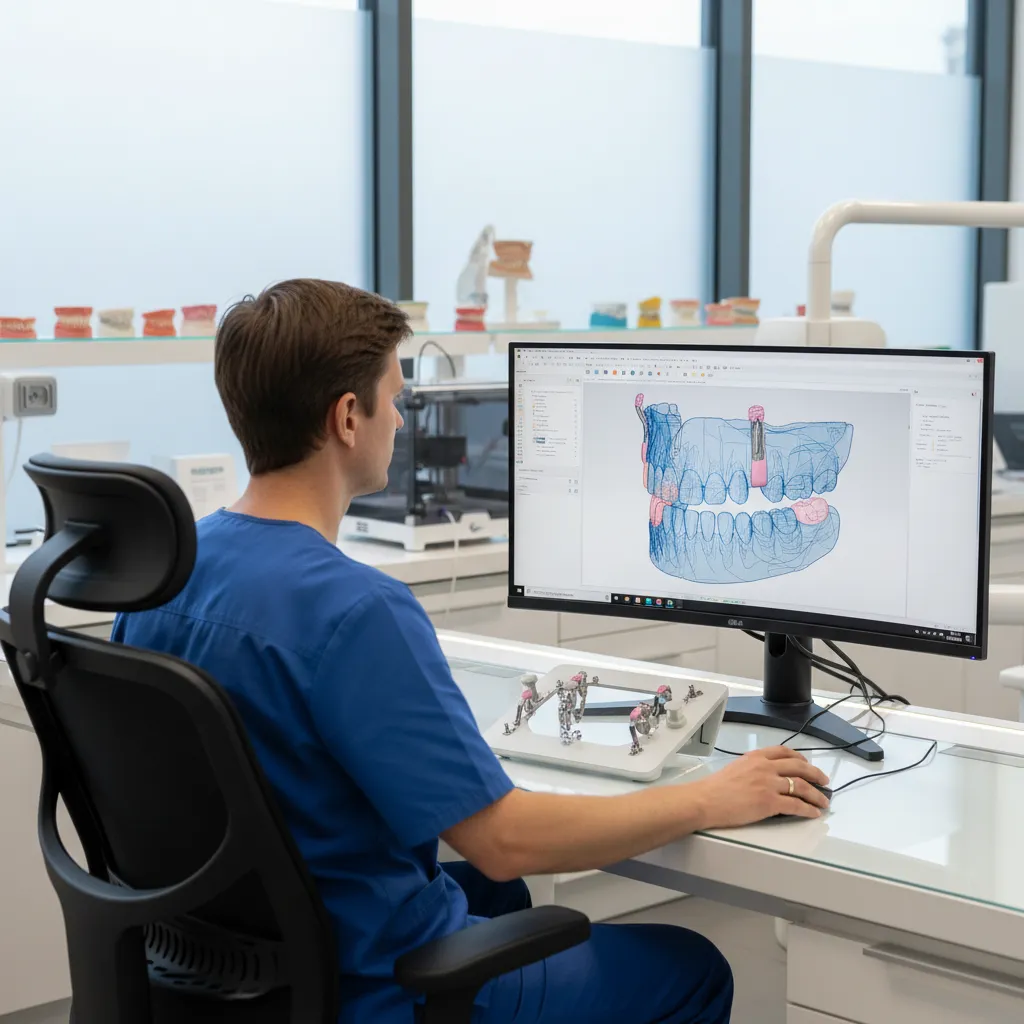
Precision attachment RPDs demand accurate planning around space, path of insertion and maintenance. Implant assisted partials offer an excellent compromise where a fully fixed solution is not realistic but “floppy” anterior acrylic is not acceptable either. These cases benefit from early lab input, wax-ups and, in digital workflows, virtual tooth setup to stress test the design before any irreversible steps.
Aesthetics: what makes a front partial look natural?
Patients rarely talk about connector design, but they notice bulk, shade mismatch and a midline that drifts. For anterior partial dentures, three areas tend to decide whether the result passes the “photo test”.

- Tooth form and shade: contour, translucency, surface texture and characterisation should echo the adjacent teeth, not just match a shade tab.
- Gingival contours: papilla fill, cervical emergence and the transition between base and mucosa are especially visible between upper incisors.
- Phonetics and lip support: F/V and S sounds, fricatives and the way the upper lip drapes over the denture teeth all feed into how “natural” the prosthesis feels and looks.
High quality lab work depends on high quality records. For anterior partials, consider making the following standard:
- Frontal, 45° and profile smile photos, both at rest and in full smile.
- Close up retracted views with a shade tab in the same plane as the teeth.
- Documentation of midline, incisal edge position and desired changes versus the pre-op situation.
Anterior partial dentures are “removable” appliances that patients judge by the same aesthetic standards as fixed restorations.
The same attention to shade mapping and incisal edge design that you would bring to ceramic veneers or anterior crowns applies here as well. If you are already working with NovaDent for fixed anterior work, the lab can carry your existing aesthetic “playbook” across to removable cases via our fixed prosthetics service.
For patient education about what dentures can achieve in terms of appearance and function, the ADA backed resource Teeth.org.au offers evidence based explanations in plain language.
How much do anterior partial dentures cost in Australia?
In private Australian practice, front tooth removable partials usually fall within the fee ranges below. Actual quotes vary with case complexity, materials and lab input, so present these figures as guides rather than promises, and invite patients to discuss individual options in person; if you want to benchmark your own fees against lab costs, you can request our price list from NovaDent Labs.
| Type of partial denture | Typical fee range (AUD) |
|---|---|
| Acrylic partial denture | Approx. $600–$1,500 per arch, depending on span and complexity.* |
| Cobalt chromium framework partial | Often around $1,200–$3,000, reflecting extra design and lab work.* |
| Flexible nylon partial | Commonly $1,000–$2,000, often sitting between or overlapping acrylic and Co–Cr in fee guides.* |
| Attachment or implant assisted partial | Higher again, as costs include crowns, attachments and/or implants in addition to the denture itself. |
Chairside tips to reduce remakes and adjustments
Anterior partials can either be smooth, one-visit insertions or the start of a remake story. A few small workflow changes tend to pay off quickly:
- Set expectations early: contrast removable and fixed options and normalise the compromises of each.
- Stabilise the foundation: treat caries, mobility and periodontal inflammation on abutment teeth before using them as key support.
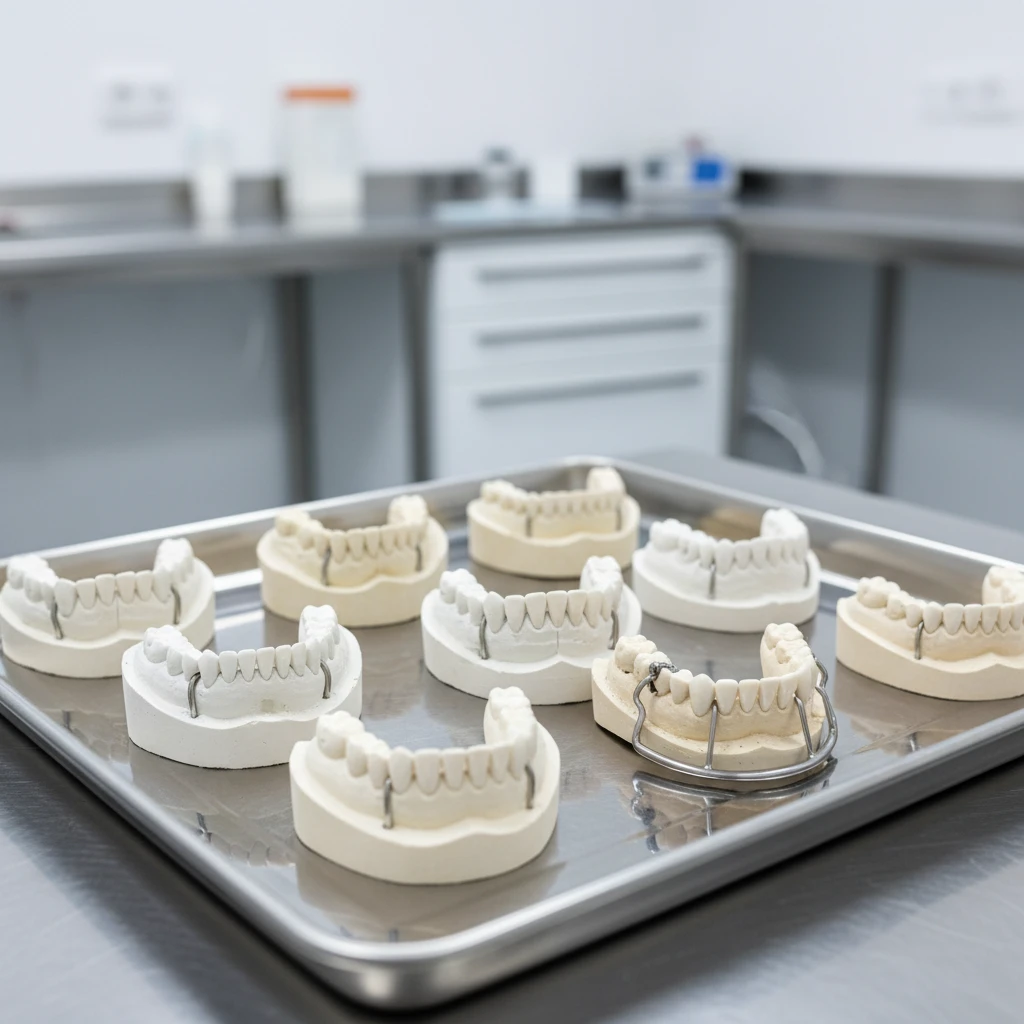
- Use clear impression and scan protocols: follow a repeatable technique that captures borders and key landmarks.
- Schedule a wax or printed try in for complex aesthetics: add a trial stage for unusual occlusion, diastemas or midline changes.
- Document occlusion at insertion: record contacts so you can troubleshoot any future problems with your lab.
For complete and partial dentures that need refinement without starting again, NovaDent has a step by step guide to wash impressions and rebase workflows, which can also support digital remakes.
Working with a digital lab on anterior partial dentures
A digital focused lab can take much of the stress out of anterior removable work when the records and prescription are aligned with what the team can do for you. For front tooth partial dentures, consider standardising this minimum data set on your NovaDent lab sheet:
- Clear indication and time frame: immediate, interim, medium term or definitive, and whether implants or fixed work are planned.
- Preferred design type: acrylic, Co–Cr, flexible or mixed frameworks, plus any constraints on metal in the smile zone.
- Digital or analogue source: intraoral scans with full arch coverage, or high quality impressions/models if analogue is used.
- Photo set: full face and intraoral images, with notes on changes to midline, incisal edge length or tooth form.
- Special instructions: space for future implants, preservation of diastemas, or planned upgrades.
The A‑P‑D‑P framework for planning anterior partials
- Aims: define the patient’s priorities for appearance, function, timeframe and budget.
- Prosthesis: choose the most honest prosthetic type for those aims (acrylic, Co–Cr, flexible, attachment/implant assisted).
- Data: collect complete records impressions or scans, occlusal information, photographs and shade mapping.
- Plan: outline stages, try ins and potential upgrades so the patient understands today’s decision and tomorrow’s options.
Micro case (composite): Consider a patient in their late 30s who presents after trauma to a maxillary central incisor, seeking an aesthetic but removable option while saving for an implant. Applying the A‑P‑D‑P framework, the clinician and NovaDent plan an immediate acrylic anterior partial with staged reviews and a future implant; the teaching point is that clear aims, records and an upgrade plan make even short term provisionals more predictable.
NovaDent Labs in Sydney supports both conventional impressions and major intraoral scanner formats for removable cases; our Sydney dental lab overview outlines how we partner with clinicians across Australia on partials, complete dentures and implant prosthetics.
FAQs
Will a front tooth partial denture look obvious in photos?
With a well planned design, appropriate material choice and good records, many anterior partials are very difficult to spot in everyday photos. High smile lines, thin biotypes and strong lighting make imperfections easier to see, so extra care with shade, incisal translucency and clasp positioning is worthwhile in those cases.
How long does an anterior partial denture usually last?
Longevity depends heavily on material, occlusion, parafunction and changes in the remaining dentition. Acrylic flippers used as immediate or short term solutions may only serve for months to a few years, especially if occlusion or support teeth change. Well designed Co–Cr or flexible partials, maintained and reviewed regularly, can serve patients for many years, though tooth wear, tissue changes and new caries may still prompt remakes or modifications.
Can a patient move from a partial denture to an implant later on?
Yes. Many clinicians purposefully design anterior partials as transitional prostheses before implants. Protecting papillae, keeping the emergence profile realistic and planning tooth position with future implant crowns in mind all make the upgrade smoother. Discuss this roadmap up front so patients see the partial as part of a broader plan rather than a “second best” compromise.
Are there quick or “same day” options for a missing front tooth?
Depending on your lab relationship and in house capabilities, options can include chairside flippers, bonded fibre reinforced provisionals or expedited acrylic partials. Same day solutions often involve more compromises on fit and durability, so they work best when positioned clearly as temporary answers that will be refined or replaced once healing and financial planning are complete.
Related Posts
You may also be interested in

Dental Implant Care: The Tooth May Be Artificial, But the Care Is Real
TMJ Splint vs Night Guard: What’s the Difference?
How to Clean a Mouth Guard Properly Without Damaging It

NovaDent Has Arrived.
Previously VTS Dental Labs.
Same team
Same standards
New identity
Visit our new website