
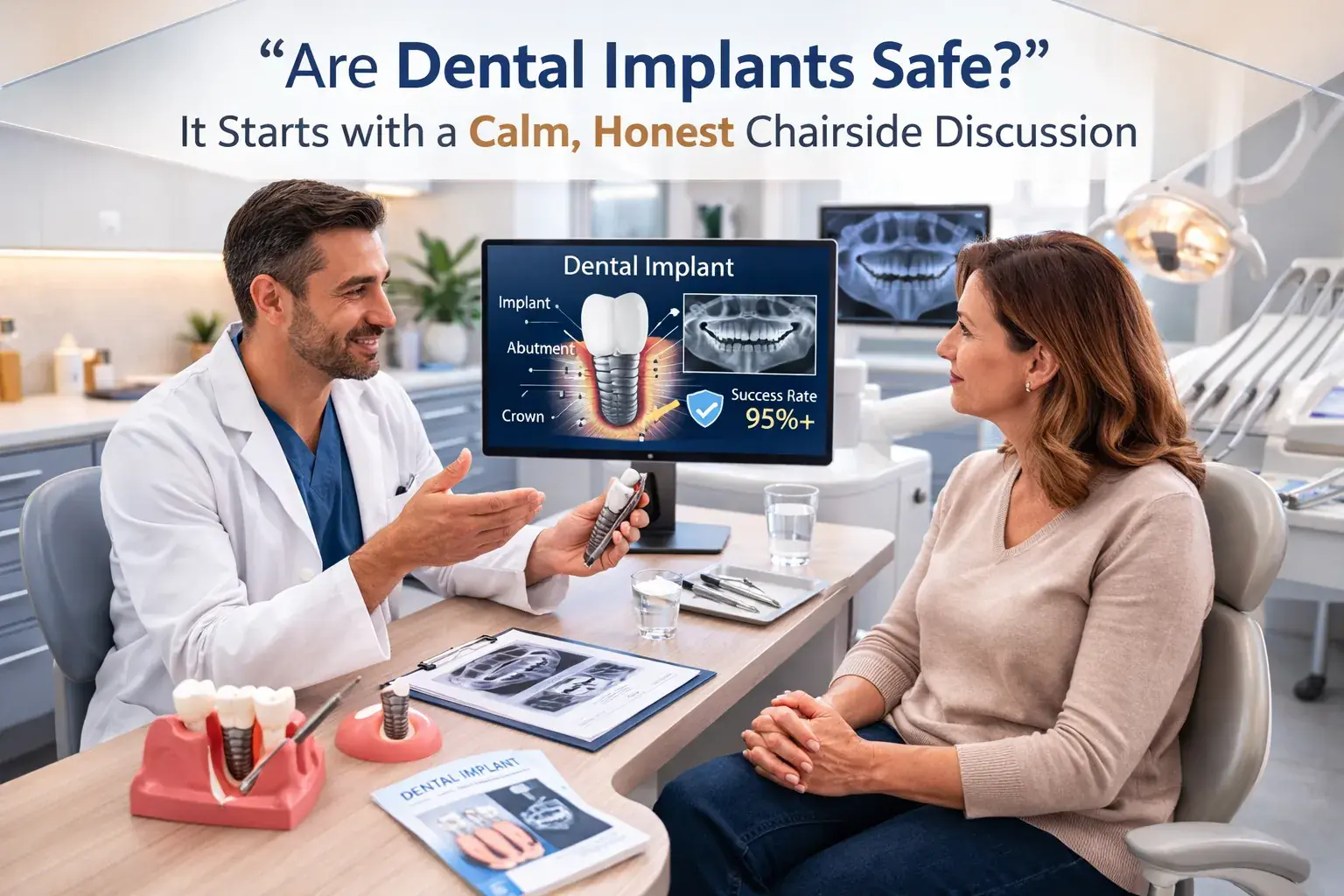
If you restore implants regularly, you probably hear the same anxious question in the chair: “Doctor, are dental implants safe?” Behind that question is a mix of Google searches, a neighbour’s horror story, and genuine worry about long term function.
Implants are among the most predictable tooth-replacement options, but safety hinges on case selection, surgical execution, and prosthetic design. This guide gives you an evidence based answer you can share with patients, a clear view of typical implant complications, and a simple 3P framework to reduce them in everyday practice.
While this article is written at a clinician level, it is also designed to help you translate the evidence into calm, honest language for anxious patients who ask whether dental implants are safe. Use it as a reference when framing options chairside and when aligning your planning with your lab.
TL;DR:
- Well planned implants show high 10 year survival compared with bridges and partial dentures.
- Complications cluster into three groups: early surgical, late biological (peri implant disease), and mechanical/prosthetic issues.
- Key drivers of failure: systemic health (e.g. diabetes, smoking), poor site quality, rushed planning, and prosthetic or occlusal errors.
- A structured 3P framework Patient, Planning, Prosthetics helps you systematically cut complication risk.
- A digital, quality focused lab partner reduces mechanical and prosthetic complications via fit, material choice, and occlusal control.
Are dental implants safe? The evidence in plain language
The short answer for most suitable patients is: yes, dental implants are generally very safe when case selection, surgical protocol, and prosthetic design are all carefully controlled.
Evidence snapshot: In healthy, non-smoking patients managed in a structured way, long term studies and meta analyses report implant level survival in roughly the mid 90% range at 5 to 10 years, with one 10 year review around 96% survival. Professional bodies such as the Australian Dental Association and consensus reports from the ITI (International Team for Implantology) recognise implants as a standard option for many missing tooth scenarios.
Safety, however, is not binary. The same implant that works beautifully in one mouth can fail in another. That’s where careful risk assessment, planning, and collaboration with a trusted digital dental lab partner make a real difference.
From a materials point of view, most modern implants are titanium or titanium alloy screws, sometimes combined with zirconia abutments. Titanium remains the gold standard because it is highly biocompatible, resists corrosion, and bonds predictably with bone, while zirconia solutions also show good tissue compatibility. To patients, you can describe osseointegration simply as “the bone healing tightly onto a specially treated metal or ceramic root”.
In Australia, endosseous dental implants are regulated as medical devices by the Therapeutic Goods Administration (TGA). Manufacturers must demonstrate compliance with safety and performance requirements and provide clinical evidence before systems are listed on the ARTG, typically under an ISO 13485 based quality system.
“Implants are not fragile, but the biology and biomechanics around them are.”
How safe are implants compared with other options?
When patients ask whether implants are “safe”, many are really asking how they compare with bridges or removable partial dentures.
- Versus bridges: Implants avoid preparing adjacent teeth and largely remove caries and endodontic risks on neighbours, but introduce their own risks of peri-implant disease and mechanical complications.
- Versus partial dentures: Implants generally offer better comfort, stability, and chewing efficiency. They remove clasp related issues but add surgical and prosthetic risks.
Systematic reviews of implant supported fixed dental prostheses commonly report 5 and 10 year survival in the mid 90% range, comparable to or better than conventional tooth supported bridges when cases are carefully planned and maintained.
For many single and short span cases, a well placed implant with a precisely fitting restoration from a specialised implant lab offers excellent long term function with a manageable complication profile. The practical question is whether this implant is safe for this specific patient, in this site, with this prosthetic design.
Common tooth implant complications you still see
Even in well run practices, dental implant complications still surface. Many are manageable if picked up early; others can threaten the entire restoration.
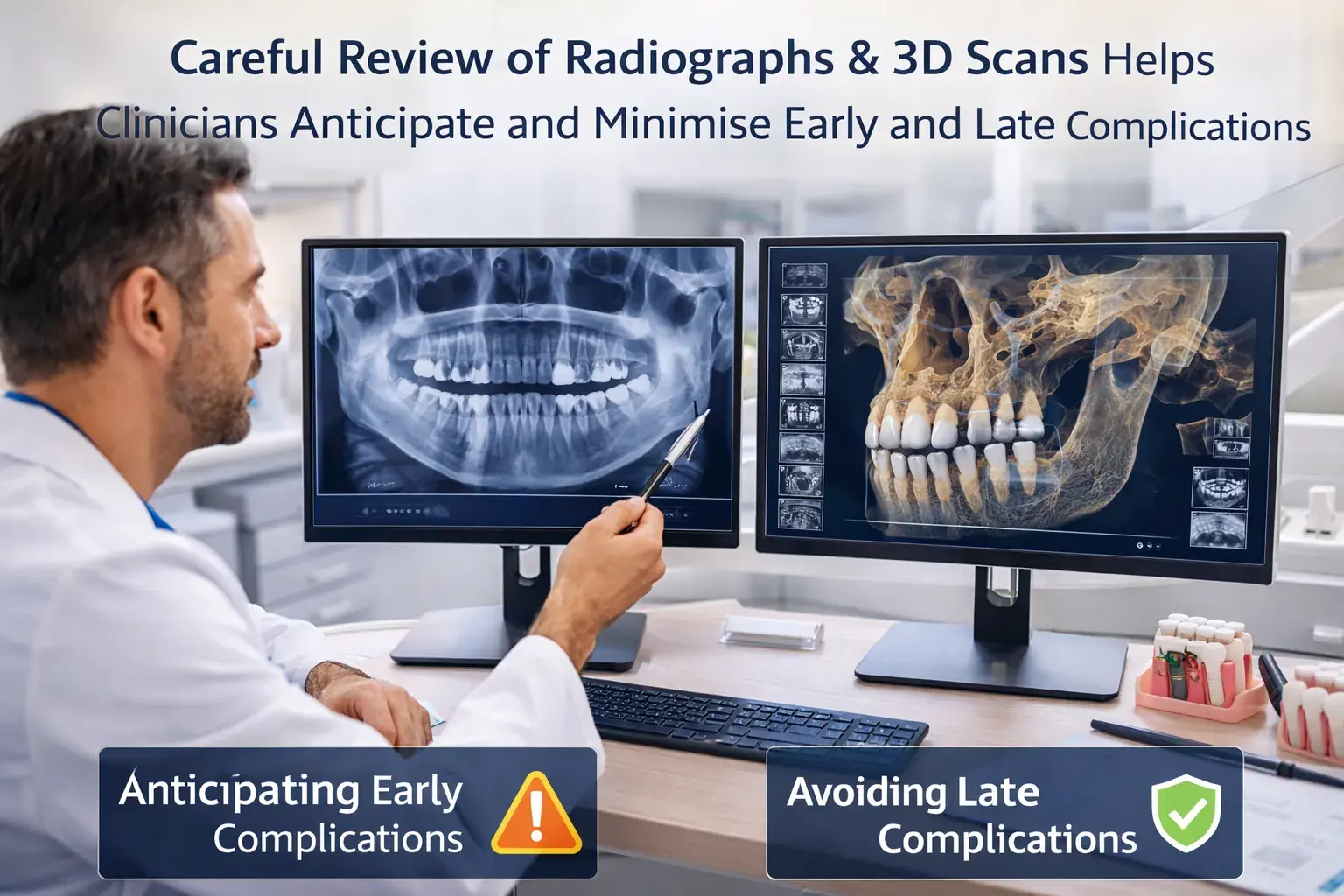
1. Early surgical complications
- Infection or poor soft tissue healing at the incision site.
- Haemorrhage or bruising, especially in medically complex patients.
- Nerve disturbance (e.g. altered sensation in the lower lip or chin).
- Sinus issues when working in the posterior maxilla.
- Clinical note: Early postoperative infection after implant placement occurs in roughly 2 to 3% of patients in routine settings, while neurosensory disturbance after mandibular implants is reported by around 5% of patients, most of whom gradually recover post operative infections after implants
- Red flags: swelling or pain that worsens after a few days, or numbness or tingling that progresses rather than improves, should prompt urgent review.
2. Late biological complications
- Peri implant mucositis – reversible inflammation, often plaque induced.
- Peri implantitis – bone loss with pocketing and inflammation.
- Soft tissue recession with aesthetic compromise, especially in the anterior.
- Prevalence: Meta-analyses using current World Workshop criteria estimate that peri implant mucositis affects roughly 40 to 50% of implant patients and peri implantitis about 15 to 25% at the patient level after several years in function.
- Red flags: bleeding or suppuration on gentle probing, especially under bulky or hard to clean contours or cement retained crowns, should trigger intervention before radiographic bone loss accelerates.
3. Mechanical and prosthetic implant complications
- Loose abutment or prosthetic screws.
- Chipped porcelain or fractured ceramic on crowns and bridges.
- Fractured acrylic in full arch cases.
- Malocclusion induced overload and micro movement.
- Prevalence: Across long term studies of fixed implant prostheses, screw loosening, veneer chipping, framework fracture and similar mechanical problems typically occur in roughly 5 to 20% of restorations over 5 to 15 years.
- Chairside tip: new “clicks”, perceived rocking, or small chips at recall are early warnings; address them before they progress to major fracture or complete decementation.
This cluster is where collaboration with a competent crown and bridge lab has the greatest day to day effect through precise fit, appropriate materials, and occlusal schemes tuned to the case type.
| Phase | Example complication | Main drivers |
|---|---|---|
| Early | Infection, nerve disturbance | Medical status, surgical planning, asepsis |
| Biological (late) | Peri implantitis, recession | Hygiene, prosthetic contours, tissue biotype, smoking |
| Mechanical | Loose screws, chipped porcelain | Fit, occlusion, material choice, parafunction |
Key risk factors that raise implant complications
Across cases, the same patterns repeat. The following factors consistently increase tooth implant complications:
Patient and systemic factors
- Poorly controlled diabetes or other conditions affecting wound healing.
- Heavy smoking or vaping.
- History of periodontitis with unresolved inflammation.
- Bruxism or significant parafunction.
- Limited ability or motivation to maintain oral hygiene.
Site and anatomical factors
- Insufficient bone volume or density, or the need for complex grafting.
- High smile line with thin biotype in the anterior maxilla.
- Limited restorative space for ideal crown contours.
- Close proximity to vital structures (nerve, sinus, nasal floor).
Prosthetic and occlusal factors
- Bulky or undercontoured emergence profiles that trap plaque.
- Non ideal occlusal schemes, especially in full arch or cross arch cases.
- Inappropriate material selection for parafunctional patients.
- Use of non original or mismatched components.
- Clinical note: Smoking, poorly controlled diabetes and a history of periodontitis consistently emerge across reviews as strong indicators for peri implant disease and implant loss. Optimise these before surgery and tighten maintenance intervals afterwards, supported by appropriate implant restoration solutions.
When implants may not be the safest option
Even when implants are technically possible, they are not always the safest or most appropriate choice for every patient or site.
- Patients unable or unwilling to maintain hygiene or attend reviews may be better served by simpler, removable or tooth supported options.
- Medically complex patients or those on medications that significantly impair healing may be safer with deferred implant treatment after medical optimisation.
- Sites requiring extensive grafting or carrying high anatomical risk may call for a conventional bridge or partial denture instead of complex implant surgery.
- In younger patients with ongoing growth, conservative temporisation and deferral of implants can preserve options and avoid unfavourable changes over time.
Framing these scenarios clearly helps patients understand that sometimes saying “not yet” or choosing a bridge or partial is the safest, most ethical recommendation.
How to reduce dental implant complications: the 3P approach
A simple way to structure your prevention strategy is the “3P” approach: Patient, Planning, Prosthetics. Each step has practical levers that shrink your complication rate over time.
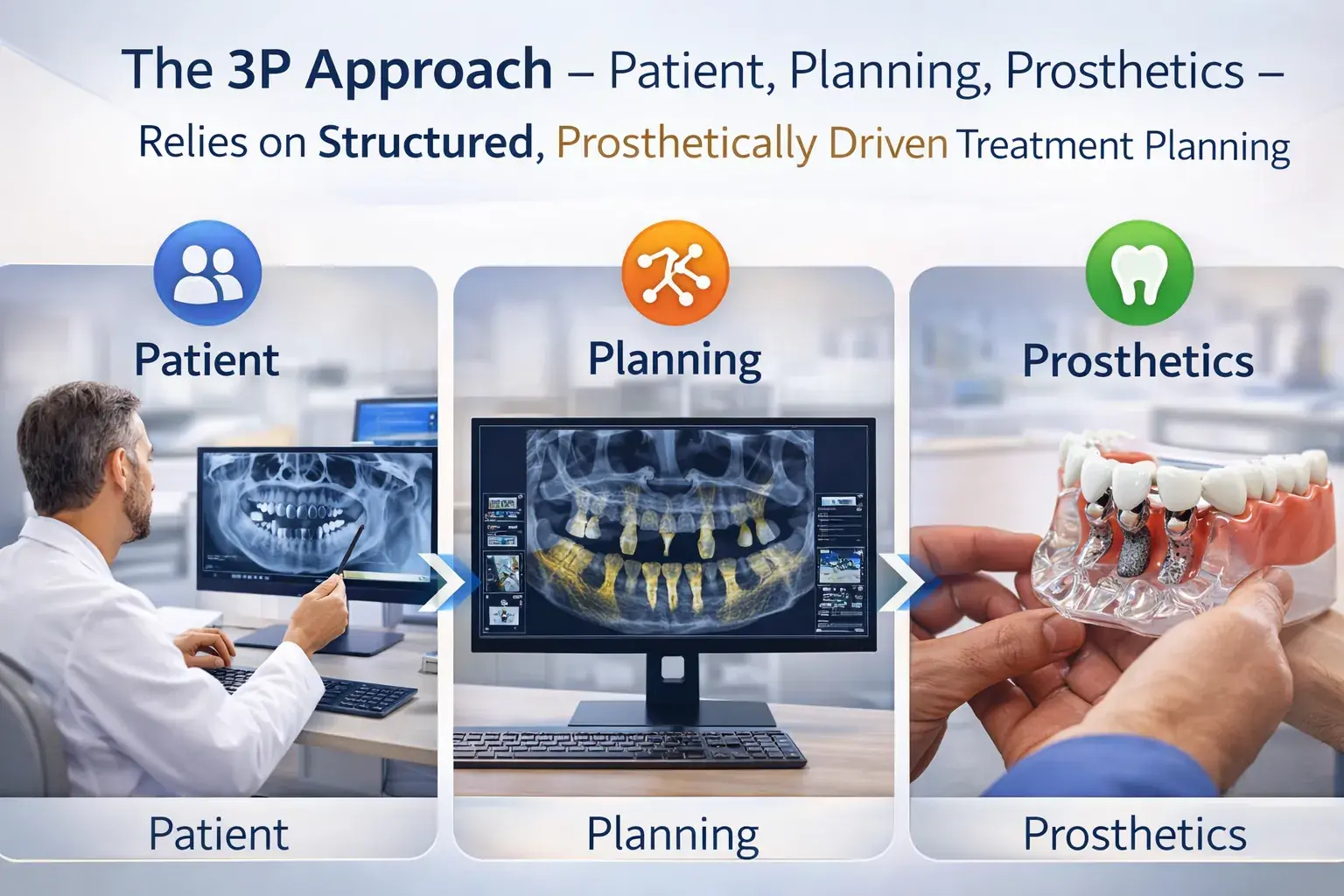
P1 – Patient: select, optimise, and set expectations
- Screen and stabilize periodontal disease before implant placement.
- Coordinate with medical practitioners to improve control of systemic conditions.
- Document smoking status and parafunction and adjust your plan accordingly.
- Set realistic expectations about aesthetics, timelines, and lifelong maintenance.
P2 – Planning: design backwards from the prosthetic
- Plan prosthetically driven implant positions using wax ups or digital setups.
- Use CBCT guided planning where anatomy is complex or aesthetics are critical.
- Involve your lab early, send photos, scans, and restorative objectives, not just an impression.
- For larger cases, consider a joint review with your lab’s senior technician before surgery.
Many clinicians find it helpful to lean on a prosthetic first implant planning guide so occlusal, aesthetic, and maintenance details are clear before the first osteotomy.
P3 – Prosthetics: control fit, occlusion, and cleansability
- Use accurate digital or conventional impressions with clear scan body positioning.
- Favour screw retained solutions where practical to remove the variable of residual cement.
- Request occlusal schemes suited to the case (e.g. lighter contacts on implant units, group function where appropriate).
- Ask your lab to design emergence profiles that support soft tissue while allowing access for cleaning.
Scheduled reviews with photos and radiographs help you and your lab refine designs over time and identify patterns in biological or mechanical complications.
Mini case (3P in practice): A 58-year-old smoker with treated periodontitis presents for a single anterior implant. You first stabilise the periodontal condition, agree on smoking reduction, and schedule closer maintenance (Patient). Working from a digital wax-up and CBCT, you and your lab plan a prosthetically driven, cleansable implant position and guided surgery (Planning). The lab fabricates a screw retained zirconia crown with a slim, hygienic emergence profile and light occlusion (Prosthetics), and at review the site shows healthy soft tissues and no mechanical issues.
For additional evidence based guidance on loading protocols and complication risk, many clinicians keep resources such as the Cochrane review on implant loading times in their reference list.
How a digital implant lab supports safer outcomes
Your lab cannot change bone quality or systemic risk, but it directly influences prosthetic and mechanical complications. Clinicians tell us these factors matter most:
- Consistent fit: CAD/CAM workflows with ISO 13485 aligned quality systems, supported by our ISO 13485 & TGA certifications, help maintain accurate fits that limit micromovement and screw loosening.
- Material, occlusion, and components aligned: Matching zirconia, metal ceramic, or hybrid solutions to parafunction and opposing dentition, designing implant appropriate occlusal schemes, and using components compatible with major implant systems together reduce fracture risk and connection problems.
- Communication: Fast feedback on scans, bite records, and design approvals helps catch issues before manufacture.
For complex cases full arch conversions, immediate loading, or mixed natural to implant occlusion partnering with a digital focused dental lab that understands these nuances can be the difference between smooth review visits and months of remakes.
FAQs
How to explain implant safety to patients in 1 to 2 sentences
When patients are anxious, a short, honest summary can help. For example:
- “For the right person, dental implants are a very safe, well researched option. Our job is to check your health carefully, plan the position with 3D scans, and then help you look after it long term.”
- “No treatment is risk free, but implants have a strong track record; if we go ahead, we’ll plan yours carefully and work closely with our lab so the final tooth is strong and easy to keep clean.”
Are dental implants safe long term?
In appropriately selected patients, long term outcomes are generally very good, with many studies showing stable function over a decade or more. Emphasise that success relies on good home care, regular reviews, and professional cleaning around the implants.
Are dental implants safe for older adults?
Age itself is not a contraindication. Overall health, medications, bone quality, and ability to maintain hygiene matter far more than the number on the birthday cake.
What should patients watch for after surgery?
Encourage patients to contact the practice promptly if they notice persistent pain, swelling that worsens after a few days, altered sensation, or mobility of the implant or temporary restoration. Provide this in your written postop instructions as well.
Are dental implants safe for smokers or patients with diabetes?
Both groups can successfully receive implants, but their risk of biological complications is higher. Encourage smoking reduction or cessation and ensure diabetes is well controlled before surgery, then emphasise stricter maintenance and more frequent reviews, supported by evidence on smoking, failure, infection and bone loss.
Are dental implants safe around nerves and sinuses?
With CBCT based planning, safety margins, and (where appropriate) surgical guides, the risk of serious nerve or sinus complications is low. Explain that careful planning is aimed at keeping implants a safe distance from nerves and maintaining a healthy sinus lining.
Are dental implants safe if a patient has a history of gum disease?
A history of periodontitis is a recognised risk factor for peri-implantitis but not an automatic contraindication. As discussed above, stabilise the periodontal condition first and maintain close, long-term supportive therapy around both teeth and implants to contain that risk.
Having a simple, branded handout supported by accurate lab-driven visuals of the planned restorations can calm nerves and reduce unplanned review visits.
Related Posts
You may also be interested in

How to Find a Premium Dental Lab

Dental Implant Care: The Tooth May Be Artificial, But the Care Is Real
TMJ Splint vs Night Guard: What’s the Difference?

NovaDent Has Arrived.
Previously VTS Dental Labs.
Same team
Same standards
New identity
Visit our new website