
That first night you wear a new mouth guard, it feels like insurance for your teeth. Fast forward a few months and the same guard can smell strange, look yellow, and feel rough and suddenly patients start leaving it in the bathroom drawer.
Dentists see this story every week. Patients invest in custom sports mouthguards and night splints, then quietly stop using them because they look and smell unclean or worry they’ll crack the plastic while scrubbing it.
The good news: with a simple, repeatable routine, you can show patients exactly how to clean mouth guard appliances at home so they stay clear, fresh, and comfortable for longer and your lab made work keeps performing the way you designed it to.
TL;DR:
- After every wear: Rinse in cool water, then gently brush with a soft toothbrush and mild liquid soap.
- Once or twice a week: Soak in a non abrasive, non alcohol solution (e.g. specialised guard cleaner, mild soap solution, or denture tablet if the manufacturer allows) for 5–10 minutes.
- Dry fully: Let it air dry completely on a clean surface before it goes into a vented case.
- Keep it cool: Only use cool or lukewarm water; heat can warp EVA and soft splint materials.
- Check regularly: If it’s cracked, cloudy, or smells even after cleaning, flag it for replacement.
Many clinics turn these points into a small care card or fridge magnet that lives next to the bathroom sink; if you work with NovaDent, you can keep a copy with your other resources in our For Dentists hub.
Why cleaning matters for guards and splints
Mouthguards sit tightly against enamel and soft tissues, so plaque bacteria, food debris and fungi can accumulate fast. In one study of 81 used athletic mouthguards, more than 450 bacterial and fungal isolates were cultured from the guards, including 154 gram positive cocci and 107 moulds clear evidence that guards need daily cleaning, not just a quick rinse.
Left uncleaned, guards can irritate mucosa, cause bad breath, and compromise underlying restorative work such as crowns and bridges. The Australian Dental Association and Sports Medicine Australia note that well fitted custom guards last longer and protect better when they’re cleaned daily, dried fully and kept out of heat.
Step 1: Know which mouth guard you’re cleaning
Cleaning routines are similar across guard types, but the material matters for what products you can safely recommend.
- Custom sports mouthguards – Often EVA based, layered for impact absorption. These are usually supplied by a dentist or lab.
- Boil and bite guards – Shop bought, moulded at home. The thermoplastic can distort easily with heat.
- Occlusal splints / night guards – Hard acrylic, dual laminate, or soft splints used for bruxism and TMJ symptoms. For design and material options, see our occlusal splint guide.
- Bleaching trays and retainers – Similar care rules, though some whitening trays have stricter product warnings.
Whenever a patient receives a mouth guard from the dentist, send them home with written instructions specific to that material and brand so they know which cleaners and temperatures are safe.
For an overview of which patients benefit from mouthguards and when to prescribe custom appliances, see the ADA’s guidelines on athletic mouth protectors.
Step 2: How to clean a night mouth guard after each use
Here is a simple morning routine you can recommend for most night guards and many custom sports guards we call it the “Rinse–Brush–Dry–Store” routine:
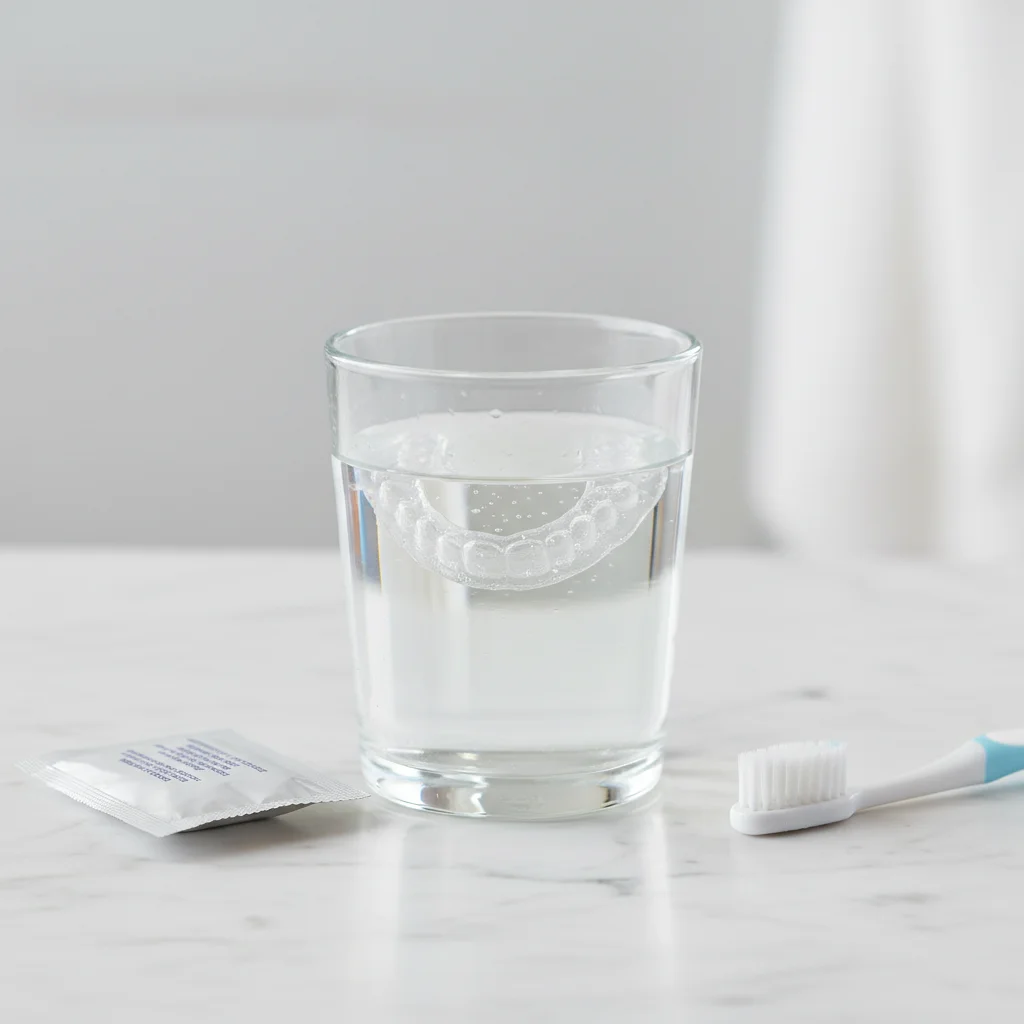
- Rinse straight away
As soon as the guard comes out of the mouth, rinse it under cool running water to stop saliva and plaque from drying on the surface. - Use a dedicated soft brush
Keep a separate, soft bristled toothbrush just for the appliance. A regular brush, especially one that’s old and stiff, can scratch the plastic. - Add mild liquid soap
Place a drop of mild, fragrance free liquid hand soap or dish soap on the brush. Gently brush all surfaces for 30–60 seconds, including the biting surface and fitting surface. - Rinse thoroughly
Wash off all soap under cool water, inside and out. Any residue can affect taste and irritate tissues. - Set it aside to dry
Place the guard upside down on a clean paper towel or clean, dry cloth in a safe spot. Let it dry completely before storing it.
Step 3: Weekly deep clean without damaging the plastic
Daily soap and water cleaning handles fresh plaque. A deeper clean once or twice a week keeps stains and odour under control.
Good options for deep cleaning
- Denture or appliance cleaning tablets – Dissolve a tablet in lukewarm water, then soak the guard for the time stated on the packet (often 5–10 minutes). Rinse very well afterwards.
- Non alcohol mouth rinse – A brief soak in diluted, alcohol free mouth rinse can freshen odour for some materials.
Some hard acrylic guards may also tolerate occasional short vinegar soaks, but only if the manufacturer’s instructions allow it.
Products that commonly cause trouble
Patients often experiment with household cleaners and end up with distorted, cloudy appliances. A simple comparison chart helps:
| Generally safe (check manufacturer) | High risk for damage |
|---|---|
| Mild liquid soap | Hot or boiling water |
| Non abrasive paste or gel cleaners | Bleach or strong household cleaners |
| Denture cleaning tablets (if permitted) | Undiluted essential oils |
| Alcohol free mouth rinse (diluted) | Dishwasher or microwave |
| Vinegar solutions for hard acrylic | Abrasive whitening toothpaste |
Because formulas differ, the safest message is to follow the cleaning instructions supplied with the guard and check with the prescribing dentist before trying new products.
How to clean a mouth guard from the dentist
Patients rightly assume that a custom guard from the dentist should be treated with more care than a chemist version. Here’s a simple script you can share for both night guards and sports guards supplied through your practice, especially custom appliances made through our dental appliances service.

Core talking points for custom guards
- “This is a medical device, not a sports shop gumshield.” Set the tone early that it needs regular, gentle cleaning and review by a dental professional.
- “Cool water only.” Custom EVA and soft occlusal appliances can distort in hot water or direct heat, which ruins the fit.
- “Use soap, not kitchen sprays.” Emphasise mild liquid soap and specialised cleaners, not bleach or scrubbing powders.
- “Bring it to every recall visit.” Encourage patients to bring their guard to six month check ups so you can inspect it and have it professionally cleaned if needed.
Drying, storage and travel tips
Cleaning gets the headlines, but drying and storage make just as much difference to long term hygiene.
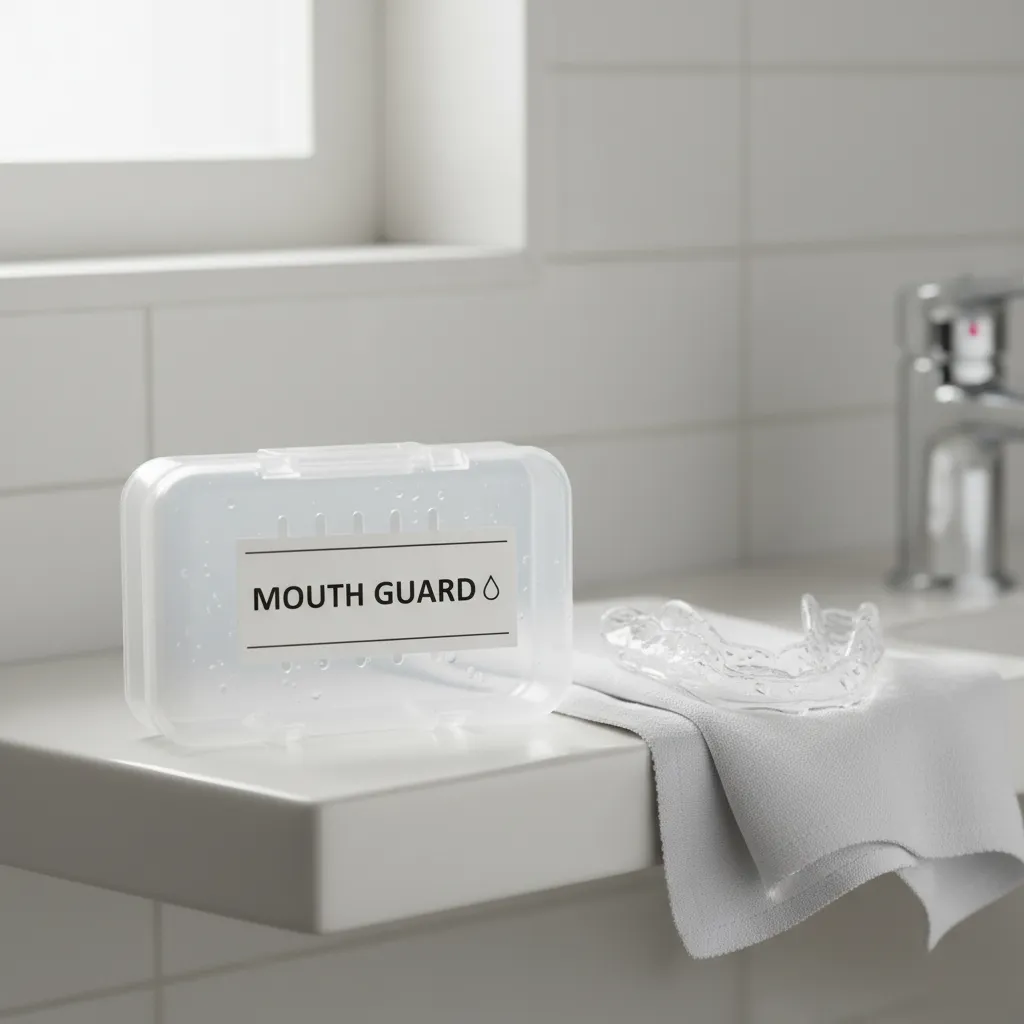
- Let it dry fully before closing the case. A damp, sealed case is the perfect home for bacteria and mold.
- Use a vented, labelled case at home and when travelling. Vent holes let moisture escape, while a name label and sturdy case protect the guard in school bags, sports kits, and on bedside tables.
- Keep it cool and away from heat and pets. Direct sun, car dashboards, heaters and curious dogs can all warp or damage a guard.
- Bring the guard and case to check ups. Sports bodies and dental associations recommend regular review, especially for growing children.
When to replace a mouth guard
Even with careful cleaning, a mouthguard will not last forever. As a guide, adult custom guards usually last around one to three years, while growing children often need a new guard every 12–18 months.
Ask patients to look for:
- Cracks, tears or bite through areas
- Edges that feel sharp on the tongue or cheeks
- Yellow or brown discolouration that doesn’t lift with cleaning
- Persistent odour even after a deep clean
- Fit changes rocking, looseness, or pressure points
- Headaches or jaw pain returning despite regular wear
Reassure patients that replacement is often an upgrade, not a setback: updated impressions, a fresh digital scan, or a revised design from the lab can improve comfort and protection, and better safeguard future work such as dental implants.
FAQs
Can I use regular toothpaste on my guard?
Occasional use of plain, non whitening toothpaste is usually fine, but daily cleaning is better done with mild soap and a soft brush.
How do I clean a night mouth guard when I’m travelling?
Rinse with cool water, brush with mild soap, let it dry fully, then store it in a vented case. For longer trips, pack denture tablets for weekly deep cleaning.
Is mouthwash enough to disinfect a guard?
No use diluted, alcohol‑free mouthwash only as an occasional freshener, not a substitute for brushing and periodic soaking in a recommended cleaner.
What’s the best way to explain how to clean a mouth guard from the dentist to patients?
Explain three points daily cleaning with mild soap, a weekly endorsed soak, and cool, dry storage and back it up with a simple written handout.
Should patients ever use boiling water?
No. Boiling water quickly distorts boil and bite, EVA and even some custom splint materials, ruining the fit and protection.
Related Posts
You may also be interested in

How to Find a Premium Dental Lab

Dental Implant Care: The Tooth May Be Artificial, But the Care Is Real
TMJ Splint vs Night Guard: What’s the Difference?

NovaDent Has Arrived.
Previously VTS Dental Labs.
Same team
Same standards
New identity
Visit our new website