
.webp)
Patients love convenience. When they hear that a same day crown might be possible, eyes light up and diaries come out. But you also know not every case is a quick chairside mill and bond. Some cases suit a single visit workflow; others really need the detail and layering that only a lab can give.
The real question for a modern practice isn’t “chairside or lab?” It’s how to match each case to the right workflow so you get reliable fits, predictable occlusion, and restorations that look good beyond the first recall. In this guide, we’ll look at how single visit crowns and lab made crowns compare, and how a digital lab partner can support both without slowing the surgery down.
“The best crown is the one that matches the biology, biomechanics and expectations of this patient, in this mouth, at this moment in their life.”
TL;DR:
- Chairside CAD/CAM is usually best for straightforward single posterior units with good isolation and stable occlusion (see “When a same day crown makes sense” and the 3–2–1 framework below).
- Lab made crowns are the safer default for anteriors, multi unit cases, implants, heavy wear and any situation where you need technician level control over aesthetics and occlusion (see “When a lab crown is the better choice”).
- Offering a dental crown same day option is a practice builder, but long term success still depends on case selection, prep design and bonding, ideally supported by a consistent lab partner such as NovaDent Labs.
NovaDent Labs provides precision manufactured dental restorations for practices across Australia.
View Our Services →
Submit a Case →
What is a same day crown?
A same day crown is usually a CAD/CAM ceramic restoration designed and milled chairside from an intraoral scan. The classic setup is a scanner, design software and a milling unit from systems such as CEREC or Planmeca. For a broader overview of how these technologies fit into restorative workflows, there is a concise CAD/CAM dentistry summary available online for patients and clinicians.
Chairside CAD/CAM workflow in a typical practice
- Prep the tooth and manage soft tissue as you normally would.
- Scan the quadrant or arch with your intraoral scanner.
- Design the crown in house, often using AI assisted proposals.
- Mill the restoration from a ceramic block, then finish and characterise as needed.
- Try in, adjust occlusion, then bond or cement in the same appointment.
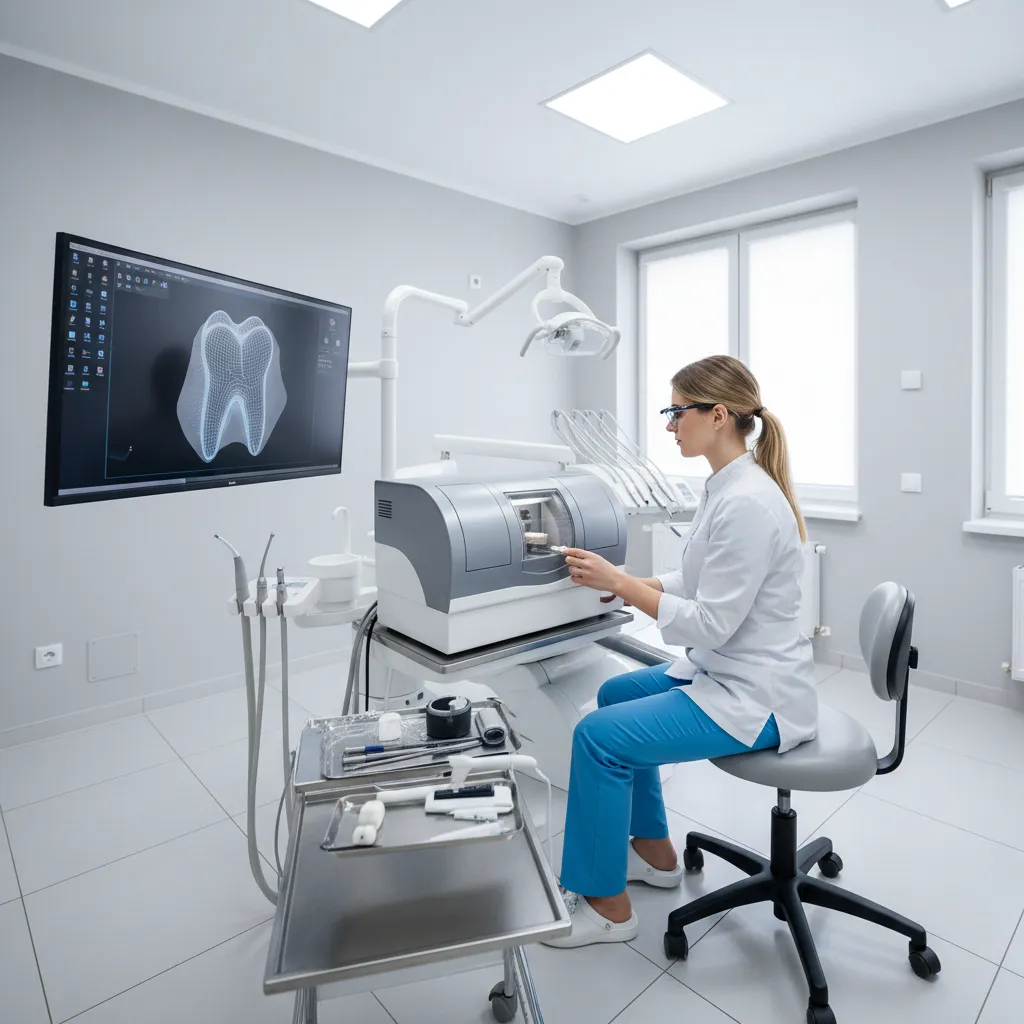
Chairside CAD/CAM workflows let you design and mill a same day crown in a single visit.
For a same day crown dentist, the attraction is obvious: one visit, no provisional and a very happy patient walking out restored an hour or two later.
Materials and indications for same day crowns
Most chairside systems rely on lithium disilicate, hybrid ceramics or chairside zirconia blocks. These materials are proven for single unit restorations when occlusion, ferrule and bonding conditions are favourable. Simple posterior crowns and some premolars are often ideal. A recent zirconia and glass ceramic review suggests lithium disilicate is particularly well suited to highly aesthetic anterior and single posterior crowns, while higher strength translucent zirconias are preferred where occlusal loads are greater or spans are longer.
What is a lab made crown?
A lab made crown is designed and manufactured outside the surgery, either from a digital impression or a traditional PVS. At NovaDent Labs, almost all cases run through a full CAD/CAM workflow with strict QA and technician review.
Modern lab workflows
A typical case involves:
- Receiving an intraoral scan and digital prescription.
- Designing the crown with calibrated occlusal schemes and contact points.
- Milling in zirconia, lithium disilicate or metal ceramic depending on the case.
- Staining, glazing or layering for colour depth and surface texture.
- Verification, polishing and dispatch back to the practice.
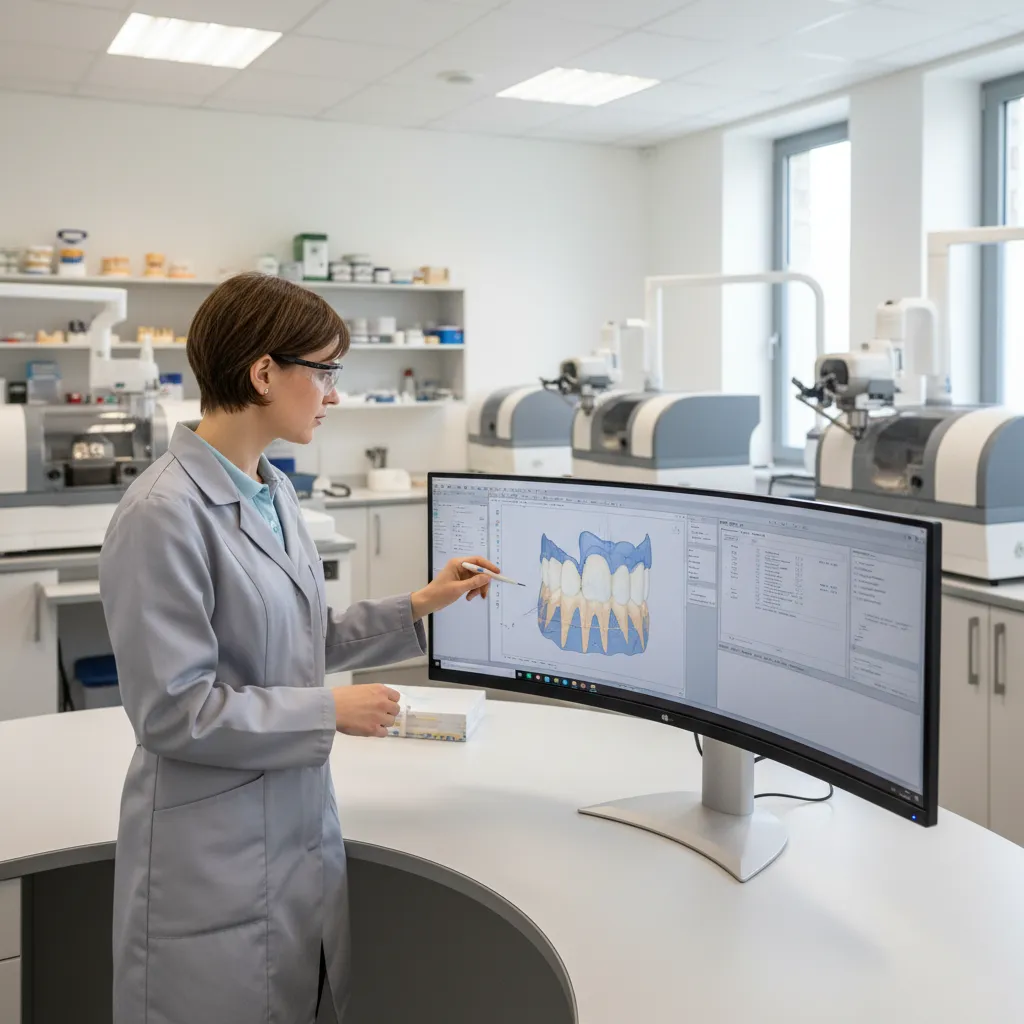
Digital dental labs use CAD/CAM design and milling to fabricate lab made crowns.
For anterior work, complex occlusion or implant restorations, technician input and lab equipment give you options that are hard to match at the chair.
For patients who want a plain language explanation of what crowns and bridges involve, the Australian Dental Association’s crowns, bridges and veneers guide can be a useful resource to share.
Same day crown vs lab crown: key differences
When you weigh up the same day crown vs lab crown, it helps to see the trade offs side by side.
| Aspect | Same day crown | Lab made crown |
|---|---|---|
| Visits | Single visit, no provisional | Two visits, with temporary or long term provisional |
| Time in chair | Longer single appointment | Shorter individual appointments, longer total timeline |
| Materials | Chairside lithium disilicate / zirconia blocks | Wider range: multi layer zirconia, layered ceramics, metal ceramic |
| Aesthetics | Good for posterior; limited custom layering | Excellent for anteriors; detailed surface anatomy and character |
| Case complexity | Best for single, straightforward units | Handles complex, multi unit, implants and vertical dimension changes |
| Control over occlusion | Chairside refinement; depends on time and operator skill | Technician input with articulators and digital occlusal schemes |
| Equipment cost | High capital cost, ongoing block and maintenance spend | Lower capital burden; pay per case via lab fee |
| Practice positioning | Marketed as “dental crown same day” convenience | Marketed on aesthetics, longevity and specialist level results |
From a survival perspective, contemporary ceramic crowns perform very well whether they are fabricated chairside or in the lab. A large meta analysis of hybrid polymer and ceramic CAD/CAM crowns (JCM 2020) reported survival of about 99% up to 24 months and around 95% at 36 months or longer, with estimated five year survival for lithium disilicate, alumina, zirconia and porcelain fused to metal full crowns all in the mid 90% range.
3–2–1 Crown Selection Framework
To make chairside decisions simpler, many clinicians use a quick mental checklist before deciding on a same day or lab crown. The 3–2–1 Crown Selection Framework below turns the comparison table into something you can run through in seconds at the end of the prep.
- 3 green lights – consider same day:
- Single posterior unit with good ferrule and supragingival or equigingival margins.
- Stable occlusion, no major parafunction, and space to adjust without compromising strength.
- Patients clearly value fewer visits and can stay in the chair for a longer single appointment.
- 2 yellow lights – lean to the lab:
- Any anterior tooth where shade, translucency or texture must blend seamlessly.
- Multiple units, changes in vertical dimension, or an implant supported restoration.
- 1 red flag – lab only:
- Uncontrolled moisture, deep subgingival margins, very limited remaining tooth structure, or a history of failed restorations on that tooth.
If all three “green lights” are present and no red flags appear, a same day workflow is usually defensible. As soon as you see two yellow lights or one red flag, the safer and more predictable option is almost always to plan a lab made crown and let your digital lab handle the additional complexity.
When a same day crown makes sense
Same day crowns shine when logistics and case selection line up think of the busy professional flying out tomorrow, or the nervous patient who struggles to come back for multiple visits. In these situations, avoiding a temporary and finishing the tooth in one appointment can be a major win for both patient and practice.
In most practices, the green light cases are those that pass all three checks in the 3–2–1 framework with no red flags: a stable posterior tooth with good ferrule and margins you can keep dry, an occlusion you understand, and a patient who genuinely values single visit convenience.
When a lab crown is the better choice
There are cases where sending to a lab is less about convenience and more about protecting the outcome. If you have to wrestle with soft tissue, compromised tooth structure, demanding anterior aesthetics or significant occlusal changes, technician input tends to pay for itself in predictability.
On the 3–2–1 framework, these are the “two yellow lights” or “one red flag” situations: anterior units where shade and translucency must blend perfectly, multi unit or full arch work, implant supported crowns and bridges, or teeth with very limited remaining structure and heavy parafunction.
These are the cases where collaboration with a lab like NovaDent Labs helps you plan materials, prep design and cementation protocols so you spend less time adjusting and more time reviewing predictable results.
Combining chairside and lab workflows
Many practices now run a blended model: chairside CAD/CAM for simple cases and a digital lab for everything else. With intraoral scanners in place, switching between “mill now” and “send to lab” is as simple as changing the prescription, and NovaDent accepts scans from all major systems with a 5 to 9 business day turnaround for typical crown and bridge cases.
- Similar occlusal contacts and morphology whether you mill in house or outsource.
- Shade recipes and material choices recorded for future matching.
- Digital records that keep the chart clean and make future planning easier.
Explaining timing, cost and quality to patients
Patients rarely ask about specific ceramics; they ask, “How many visits?” and “Will it last?” A simple way to answer is to frame both options as deliberate clinical choices, not “fast versus slow”:
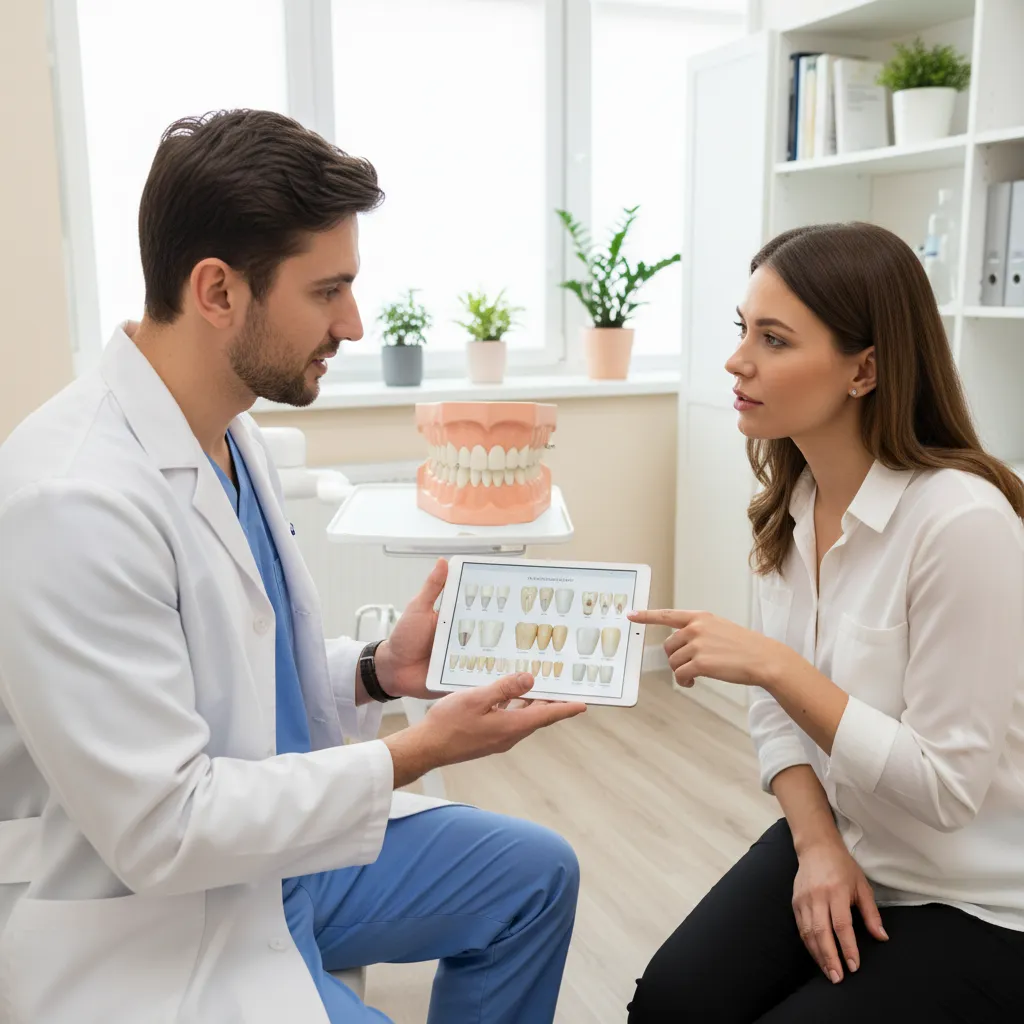
Clear conversations about timing and outcomes help patients choose between same day and lab made crowns.
- For same day cases: “For your tooth, we can scan and make the crown here today. You’ll leave with the final restoration, and we’ll still review the bite and margins at your next check up.”
- For lab cases: “Because this tooth is at the front, linked to an implant or carrying more load, I’m working with our lab to hand finish the crown. It takes a little longer, but it lets us fine tune the colour and shape.”
How NovaDent Labs supports your crown workflows
NovaDent Labs grew from the clinical side of the chair, with a focus on making lab made crowns feel as predictable as your best same day cases.
Working with NovaDent, you can expect:
- Digital friendly workflows for all major intraoral scanners.
- Consistent contacts and occlusion designed to minimise chairside adjustment.
- Material guidance on when to choose multi layer zirconia, lithium disilicate or metal ceramic.
- Case planning support for full mouth work, implants and vertical changes.
NovaDent Labs provides precision manufactured dental restorations for practices across Australia.
View Our Services →
Submit a Case →
If you’re reviewing how you balance same day and lab made crowns, you can request our current price list and talk through case types with the NovaDent team.
FAQs
Are same day crowns as strong as lab made crowns?
When you use modern ceramics within their indications and follow the bonding instructions, chairside and lab made crowns both perform very well. The bigger differences usually relate to case selection and design control rather than fundamental material strength.
When should I not do a dental crown the same day?
Red flags include uncontrolled moisture for bonding, unsettled occlusion, very deep subgingival margins, or anterior cases where a perfect shade match matters more than speed. In those situations, provisionalisation plus a lab made crown often leads to a calmer second visit and a more predictable result.
Can I mix chairside and lab workflows for the same patient?
Yes. Many clinicians restore posterior units with same day crowns and send anteriors, bridges and implants to the lab. Using the same scanner and digital files across both pathways keeps records tidy and makes future treatment planning far easier.
Is a same day crown always cheaper than a lab crown?
Not necessarily. You avoid a separate lab fee but take on equipment, block and maintenance costs of dental crown plus longer single visit chair time, so fees are often similar. The more useful question is which workflow gives the best long term outcome and return per clinical hour for that particular tooth.
Related Posts
You may also be interested in

How to Find a Premium Dental Lab

Dental Implant Care: The Tooth May Be Artificial, But the Care Is Real
TMJ Splint vs Night Guard: What’s the Difference?
NovaDent Has Arrived.
Previously VTS Dental Labs.
Same team
Same standards
New identity
Visit our new website